

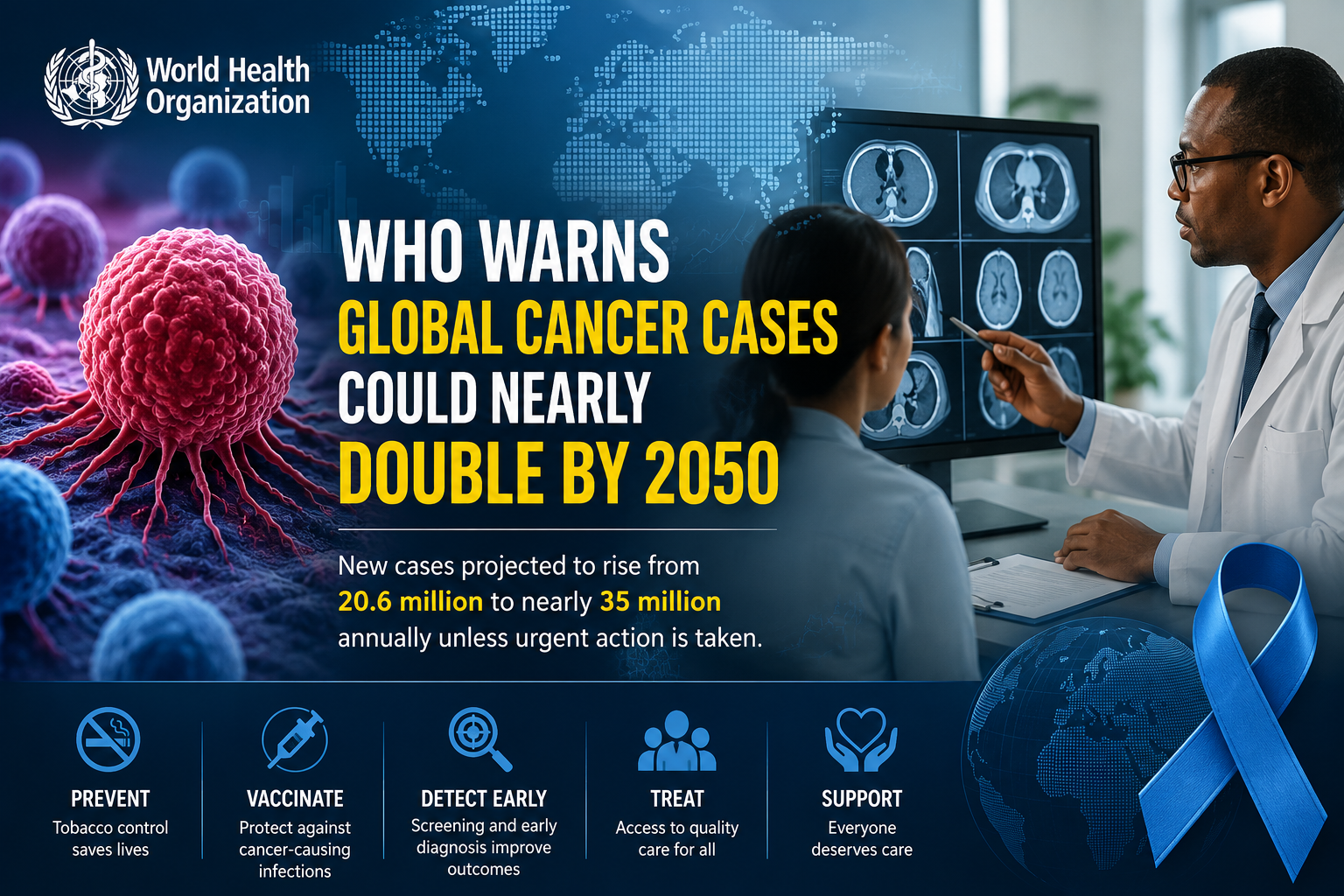
The World Health Organization (WHO) has called for urgent global action to tackle the growing burden of cancer, warning that the number of new cases could rise from about 20.6 million annually to nearly 35 million by 2050 if countries fail to strengthen prevention, early detection, treatment, and supportive care.
The warning accompanies the release of the WHO Global Status Report on Cancer 2026, developed in collaboration with the International Agency for Research on Cancer (IARC). The report highlights that cancer currently claims nearly 10 million lives each year, with more than 26,000 deaths occurring every day worldwide.
According to WHO, population growth, ageing, and persistent exposure to preventable risk factors are expected to drive a significant increase in cancer cases over the coming decades. The organization stressed that while scientific advances have improved cancer diagnosis and treatment, access to these services remains highly unequal, particularly in low- and middle-income countries.
READ ALSO: In Just Seconds, AI Can Generate Proteins Aimed at Defeating Cancer and Superbugs
The report urges governments to adopt a people-centred approach that prioritises prevention alongside treatment. WHO identified tobacco control, vaccination programmes against cancer-causing infections such as human papillomavirus (HPV) and hepatitis B, early screening, timely diagnosis, and expanded access to quality cancer care as essential measures to reduce future deaths. Recent advances in treatment are also giving patients new hope, as highlighted in new era for prostate cancer therapy.
Despite the alarming projections, WHO noted that progress has been made in several areas. Many countries have strengthened tobacco control policies, expanded vaccination programmes, and improved cancer services. However, the agency said these gains have not been shared equally, leaving millions of people without access to lifesaving care.
WHO is urging governments, health institutions, and development partners to invest more in cancer prevention and healthcare systems to ensure that quality cancer services are available to everyone, regardless of where they live or their ability to pay. Without decisive action, the global cancer burden is expected to place increasing pressure on health systems and economies over the next 25 years.


 English