

By Deborah Bamisaye
“Sorry mummy, they will soon attend to you.” The elderly woman shifted slowly on the plastic chair; her face tight with discomfort. The waiting area was already filling up.
“Next!”
“It’s our turn, Mum. Please, move gently… Good morning, ma.”
“Good morning. Sit down. What’s wrong with her?”
The nurse flipped through a blank register, then paused. “She needs to open a card first. Ten thousand naira.”
“Can I transfer?”
“Yes. Here are the account details.”
A few seconds passed. “There you go. It’s done. Please attend to her quickly.”
“Alright. Let me check her vital signs first.”
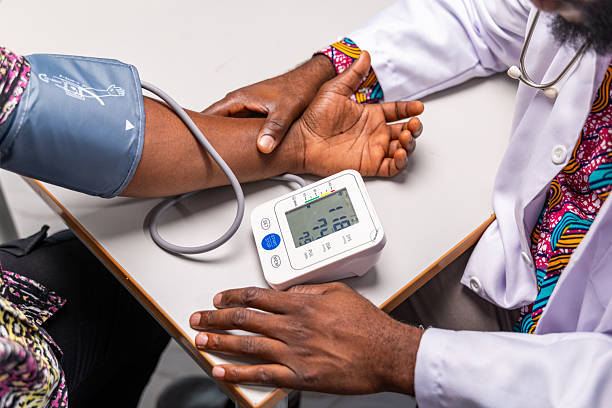
She wrapped the cuff around the woman’s left arm. “Relax, ma.”
The machine beeped. The nurse noted the numbers. “I’ll check your pulse now…”
“Excuse me, ma,” the daughter interrupted politely. “Are you done checking her blood pressure?”
“Yes.”
“How?” She looked confused. “You only checked her left arm.”
The nurse sighed. “Madam, are you teaching me my job?”
“No… I mean – yes.” Her voice rose… “Both arms are supposed to be checked. I read it in PharmaTimes. Measuring just one arm can lead to wrong diagnosis.”
The room went quiet.
(At that moment, a matron walked in)
“What’s all this noise?”
Before the nurse could finish her explanation, the matron nodded. “She’s correct. Check both arms. Record the higher reading. Then proceed with the other vital signs.”
And turning back to the daughter, she said gently. “Sorry about that. Everything is under control.”
The cuff was reapplied – this time to the right arm. The numbers changed.

To a Regular clinic, nurses often measure BP on the left arm because of tradition, not guideline evidence. The belief that the left arm is inherently better because of closeness to the heart is not supported by findings; the right arm often showed higher BP in many participants. Notable Nigerian Hypertension Expert – Professor Oladipo Akinkugbe, a pioneer in hypertension research in Nigeria (and first Nigerian professor of medicine in this field), contributed significantly to understanding blood pressure in Nigerian populations. He helped shape how hypertension is studied and managed in the country.
Family Physicians and Researchers:
In a Nigerian primary care study that looked at blood pressure differences between arms, noted that many clinic nurses usually measured BP on the left arm – often under the belief that it was more “reliable because it’s closer to the heart.” But the study did not support this belief and showed that BP can be higher in either arm, so this assumption can lead to misdiagnosis if only one arm is used. The study recommends measuring both arms to avoid missing a higher reading.
So, neither the left nor the right arm is “more accurate” by default. The accurate arm is the one that gives the higher, consistent reading for that person. Let’s break it down clearly. We will be considering some of the questions that may be on your mind, while trying to give answers as best as possible.
1. Do blood pressure readings differ between arms & how does one interpret the difference?
Yes. It is normal to have a small difference between the left and right arms. A difference of up to 10mmHg is usually normal. A difference of more than 10–15 mmHg, especially if persistent, may suggest a circulation problem and should be evaluated. Because of this, both arms should be checked at least once. It could be more to check for consistency or possible change.
2. Which arm gives the “true” blood pressure?
The arm with the higher reading is considered the reference arm and should be used for future measurements. This is what most clinical guidelines recommend.
3. Why do health professionals often use the left arm? Is it because it is closer to the heart?
Common practical reasons include:
a. Many people are right-handed, so the left arm is more relaxed.
b. Medical equipment and patient positioning are often set up for left-arm measurement.
c. Consistency: using the same arm helps track trends over time.
Note that the heart pumps blood evenly to both arms; distance from the heart does not meaningfully affect blood pressure readings.
4. Is the left arm medically superior?
No. The arteries in both arms are supplied from the same central circulation. Any consistent difference usually comes from:
1. Natural anatomical variation
2. Muscle tension
3. Improper cuff size or placement
4. Vascular narrowing in one arm
5. Best practice for accurate blood pressure measurement.
To get the most reliable reading:
1. Measure both arms during the first assessment
2. Use the arm with the higher reading thereafter
3. Sit quietly for 5 minutes before measuring
4. Keep the arm at heart level
5. Use the correct cuff size
6. Avoid talking or moving during measurement.
The Bottom Line is:
The person who said “any arm is fine, but the highest reading is correct” is right, only if:
1. The measurement is done properly.
2. The higher reading is consistent, not a one-off error.
Share this news to everyone you care about; including those who own a BP Measurement Machine at home. This neglected imbalance must stop. It’s time to stop playing with people’s reality; no more distorted diagnosis.



 English