

By Morgan Nwanguma
A long-overlooked immune organ may be a powerful predictor of longevity, disease risk, and cancer treatment outcomes.
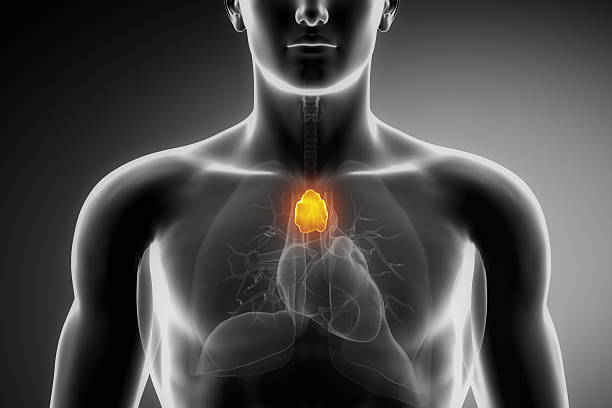
Researchers at Mass General Brigham used artificial intelligence to analyze CT scans from tens of thousands of adults and discovered that individuals with healthier thymuses – a small immune organ once believed to become largely inactive after childhood, were more likely to live longer and had significantly lower risks of heart disease, cancer, and premature death.
In two new studies, the research team found that thymic health plays a far greater role in adult well-being than previously recognised. The findings also suggest that the condition of the thymus may influence how effectively cancer patients respond to immunotherapy.
Published in the same issue of Nature, the studies challenge decades of scientific assumptions about the thymus and indicate that the organ remains an important part of the immune system throughout adulthood. The researchers say these insights could eventually help shape future approaches to disease prevention, risk assessment, and personalised cancer treatment.
“The thymus has been overlooked for decades and may be a missing piece in explaining why people age differently, and why cancer treatments fail in some patients,” said Hugo Aerts, PhD, corresponding author on the papers and director of the Artificial Intelligence in Medicine (AIM) Programme at Mass General Brigham. “Our findings suggest thymic health deserves much more attention and may open new avenues for understanding how to protect the immune system as we age.”
Functions of the Thymus
Located in the chest, the thymus plays a critical role in training T cells – specialised immune cells that help protect the body against infections and disease. Because the organ gradually shrinks after puberty and produces fewer new T cells with age, scientists have long assumed it has only a limited role in adult health.
As a result, the thymus has received relatively little attention in large-scale population research. Previous studies linked declining T-cell diversity to ageing and weakened immune function, but these investigations were typically small and focused mainly on blood samples.
The new research takes a much broader approach. Investigators analyzed data from more than 25,000 adults enrolled in a national lung cancer screening trial, as well as over 2,500 participants in the Framingham Heart Study, a long-running project that monitors the health of generally healthy adults.

AI Uncovers Links to Longevity and Disease Risk
Using artificial intelligence to analyze routine CT scans, researchers assessed the size, structure, and composition of the thymus and developed a “thymic health” score.
Participants with higher thymic health scores experienced significantly better outcomes. Compared with those who had poorer thymic health, they had an approximately 50% lower risk of death from any cause, a 63% lower risk of death from cardiovascular disease, and a 36% lower risk of developing lung cancer. These associations remained strong even after accounting for age and other health-related factors.
The researchers believe that declining thymic health may reduce T-cell diversity, limiting the immune system’s ability to identify and respond to emerging threats, including cancer and other diseases.
The analysis also identified several factors linked to poorer thymic health, including chronic inflammation, smoking, and higher body weight. These findings suggest that persistent inflammation and lifestyle factors may influence the immune system’s resilience over time.
Thymic Health and Cancer Immunotherapy
In a separate study, the research team examined CT scans and clinical outcomes from more than 1,200 cancer patients receiving immunotherapy.
The findings revealed that patients with healthier thymuses tended to respond more favourably to treatment. They experienced an estimated 37% lower risk of cancer progression and a 44% lower risk of death, even after researchers adjusted for differences in patient characteristics, tumour types, and treatment strategies.
According to the researchers, these results highlight a potentially important but previously underappreciated role for the thymus in determining the effectiveness of modern cancer immunotherapies.
More Research Is Needed
The scientists caution that further studies are necessary to validate these findings. They also note that the imaging method used to assess thymic health is not yet ready for routine clinical use.
While lifestyle factors were associated with thymic health, the studies did not determine whether modifying these factors can directly improve thymus function.
The research team is continuing to investigate additional influences on thymic health. One ongoing study is exploring whether unintended radiation exposure to the thymus during lung cancer treatment could affect patient outcomes.
“Improving our understanding and monitoring of thymic health could eventually help physicians better assess disease risk and guide treatment decisions,” said Aerts.
Apart from Aerts, other members of the overall adult health paper include Simon Bernatz, Vasco Prudente, Suraj Pai, Asbjørn Kjær, Yumeng Cao, Jiachen Chen, Asya Lyass, PhD, Borek Foldyna, Leonard Nürnberg, Christopher Abbosh, Charles Swanton, Mariam Jamal-Hanjani, MD, PhD, Michael T. Lu, Joanne M. Murabito, Kathryn L. Lunetta, and Nicolai J Birkbak.
Other members of Aerts’ immunotherapy outcomes paper comprise Simon Bernatz, Vasco Prudente, Suraj Pai, Asbjørn Kjær, Alessandro Di Federico, Andrew Rowan, Selvaraju Veeriah, Lars Dyrskjøt, Leonard Nürnberg, Joao V. Alessi, Patrick A. Ott, Elad Sharon, Allan Hackshaw, Nicholas McGranahan, Christopher Abbosh, Raymond H. Mak, Danielle Bitterman, Mark Awad, Biagio Ricciuti, Charles Swanton, Mariam Jamal-Hanjani, and Nicolai J Birkbak, PhD.
This study got financial support from the National Institutes of Health, European Research Council, Deutsche Forschungsgemeinschaft (DFG, German Research Foundation), Lundbeck Foundation, Novo Nordisk Foundation, and Savvaerksejer Jeppe Juhl og Hustru Ovita Juhl Research Stipend.


 English