
Nigeria stands at the edge of a pharmaceutical breakthrough. This September, PMG-MAN will host the 8th Nigeria Pharma Manufacturers Expo in Lagos under the theme “Regional Manufacturing: Advancing Africa’s Pharma & Life Sciences Sovereignty through Localization.”
The timing is critical because policy, capital and global partnerships are aligning like never before. For the first time, Abbott is localizing fourth-generation HIV, syphilis and hepatitis test kits in Lagos with the Presidential Initiative for Unlocking the Healthcare Value Chain and Afrimedical. The Federal Government has mobilized over $2 billion through Afreximbank and the European Investment Bank for indigenous manufacturers. NAFDAC has attained WHO Maturity Level 3, the first regulator in Sub-Saharan Africa to do so, and now targets World Listed Authority status.
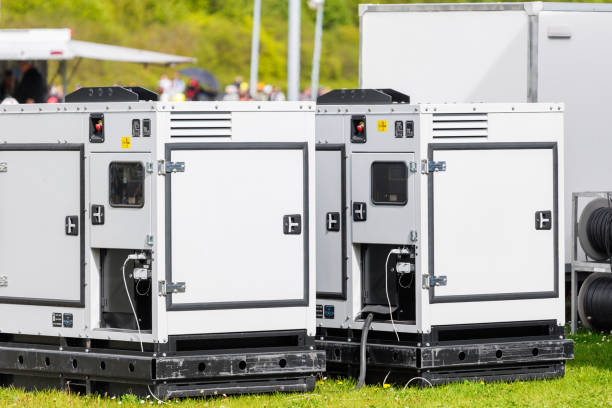
On paper, Nigeria can end 99% diagnostic import dependence and cut medicine importation from 70% to 30%.Yet PMG-MAN Chairman and May & Baker MD Patrick Ajah has issued a warning that must haunt every delegate: “Nigeria Cannot Become Africa’s Pharmacy on Generator Power.” He is right.
The industry’s frustration is the most honest diagnosis we have heard in years. NPME 2026 must not be another trade fair for business cards and glossy brochures. PMG-MAN restricted foreign participation to equipment and machinery suppliers whose products enable local production. The focus is capacity, not consumption. Lagos needs concrete deals: new production lines, technology transfer agreements replicating the Abbott model across APIs, vaccines and medical devices.
The expo must also connect the $2 billion financing pipeline to bankable local projects so Afreximbank and EIB funds do not sit idle while manufacturers complain about access. COVID-19 taught us that when supply chains collapse, countries take care of themselves first. Current tensions around the Strait of Hormuz prove that lesson again. If Nigeria cannot manufacture essential medicines, it cannot claim health sovereignty.
NPME 2026 must move us from policy statements to production lines. Other countries have shown the path. India became the pharmacy of the world after 1970s patent reforms, sustained CSIR investment, and bulk drug parks with uninterrupted power and common effluent treatment. Today India supplies 60% of global vaccines and dominates generics. Egypt built Pharma City in Khanke with state-backed utilities, tax holidays and single-window approvals, housing 150 plants that export to 130 countries. South Africa aligned SAHPRA with WHO standards and unlocked PEPFAR and Global Fund procurement, proving regulatory credibility opens markets.
Every stakeholder has a role. The Federal Government’s zero VAT and duty on raw materials and equipment is commendable, but manufacturers still face unstable power, forex volatility and multiple regulatory touch points. Stable electricity is not a luxury for pharma; it is a prerequisite. No country has industrialized on generators. Government must ring-fence power for pharmaceutical clusters and, if the national grid fails, license manufacturers to build captive solar and gas plants with tax credits.
On forex, subsidy removal and exchange rate liberalization raised the cost of imported APIs and excipients. The Central Bank must create a dedicated forex window for essential raw materials or the import ban will trigger shortages instead of production.
For PMG-MAN and local manufacturers, 70% domestic production is bold, but capacity without quality is dangerous. NIPRD’s technical support program moved firms from 33.3% to 86.7% compliance with WHO benchmarks, closing 13 of 19 critical gaps. Every manufacturer at NPME must commit to closing remaining gaps and pursuing WHO prequalification so “Made in Nigeria” becomes a standard, not a slogan.
Banks and investors must step up. Afreximbank and EIB have funds, but commercial banks still charge prohibitive rates and short tenors that do not match pharma gestation periods. The industry needs single-digit, long-term financing.
Implementation is simple but hard: power first, products second; compliance before capacity; and a regional mindset from day one. Nigeria must build pharma clusters with 24/7 electricity, common utilities and effluent treatment, or we will keep producing on diesel and pretending to be competitive. NPME’s theme speaks of regional manufacturing for a reason. ECOWAS has a free trade protocol and West Africa represents a $5 billion pharmaceutical market. Nigeria should be the hub, but that requires harmonized standards
NPME 2026 is auspicious because it coincides with policy alignment, global investment and local urgency. But if delegates leave Lagos with another communiqué and no resolution on power and forex, Nigeria will remain a consumer nation with pharmaceutical aspirations. The generators must go silent. The production lines must start. That is the only way Nigeria becomes Africa’s pharmacy.


 English