

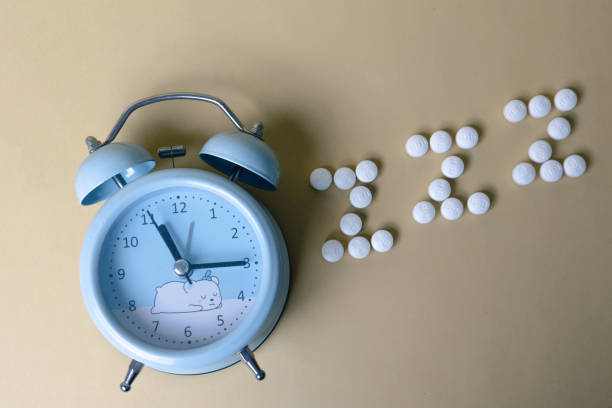
A new research effort lead by a Nigerian researcher, Ekenedilichukwu Nnadi, M.D., who is also chief resident in internal medicine at SUNY Downstate/Kings County Primary Care in Brooklyn, New York, USA, states that long-term melatonin use may secretly strain the heart thereby increasing the danger of failure, hospitalization, and death. Melatonin is a natural hormone the brain produces to regulate the body’s sleep-wake cycle. It is also available as a synthetic dietary supplement, commonly used as a short-term aid for sleep problems. The pineal gland in the brain naturally produces melatonin in response to darkness, which signals to the body that it is time to prepare for sleep by lowering body temperature and blood pressure. Light exposure at night can block this production. PharmaTimes Editor, MORGAN NWANGUMA writes that this study being a research abstract, was presented at American Heart Association’s scientific meeting, and included some 130,828 adults diagnosed with insomnia.
Already experts in Nigeria align with the general international medical consensus that melatonin is generally safe for short-term use for specific sleep disorders but caution that it should be used ideally under the supervision of a healthcare provider.

Nigerian experts, like their international counterparts, recommend behavioural changes and good sleep hygiene practices as a first line of treatment for general sleep issues. Melatonin should not replace these healthy habits, they warn.
Regulation and Quality Concerns: A significant concern noted is that melatonin is often sold over-the-counter and not strictly regulated, meaning the actual content of the supplement can vary significantly from the label, and products may contain contaminants. This lack of quality control emphasizes the need for caution and consulting a healthcare professional.
Researchers report that long-term melatonin users were nearly twice as likely to die and more than three times as likely to be hospitalized for heart failure. Although melatonin is commonly viewed as a harmless sleep aid, experts now advise greater caution with prolonged use.

Key Research Findings
· A review of health records from over 130,000 adults with insomnia found that individuals who used melatonin for at least one year faced significantly higher risks of developing heart failure, being hospitalized for the condition, or dying from any cause compared with those who did not use the supplement.
· While the study does not prove that melatonin directly causes these outcomes, the strong association raises important questions about the safety of chronic use. Researchers stress the need for additional studies to better understand melatonin’s long-term effects on the heart.
Long-Term Melatonin Use Tied to Higher Heart Failure Risk
People who rely on melatonin for sleep may be exposing themselves to unforeseen health dangers. In a preliminary study presented at the American Heart Association’s Scientific Sessions 2025, adults with chronic insomnia who used melatonin continuously for a year or longer showed a higher likelihood of developing heart failure, being hospitalized for heart failure, and dying from any cause compared with non-users. These findings currently are being examined in detail at the AHA’s annual meeting, in November, 2025 in New Orleans, a major global forum for cutting-edge cardiovascular research.
Melatonin is a hormone produced by the pineal gland to regulate the body’s sleep-wake cycle, rising at night and falling during daylight. Synthetic melatonin, chemically identical to the natural hormone, is widely taken to manage insomnia and jet lag. In many places, including the U.S., it is available over the counter. However, because supplements are not regulated there, melatonin products can vary greatly in potency and purity, adding another layer of uncertainty for long-term users.

How the Research Was Conducted
Researchers separated participants into two categories based on their medical histories. Individuals who had taken melatonin for at least one year were placed in the “melatonin group,” while those with no record of melatonin use formed the “non-melatonin group.”
“Melatonin supplements may not be as harmless as commonly believed. If our findings are confirmed, they could influence how clinicians advise patients about sleep aids,” said Ekenedilichukwu Nnadi, M.D., lead author of the study and chief resident in internal medicine at SUNY Downstate/Kings County Primary Care in Brooklyn, New York.
Investigating Heart Failure Risk and Sleep Aid Safety
Despite melatonin’s reputation as a natural and safe sleep remedy, little is known about its long-term effects on the cardiovascular system. The research team sought to determine whether extended melatonin use could heighten the risk of heart failure among adults with chronic insomnia. Heart failure, affecting roughly 6.7 million American adults occurs when the heart cannot pump enough oxygen-rich blood to meet the body’s needs, according to the American Heart Association’s 2025 Heart Disease and Stroke Statistics.
To explore this question, the investigators used the TriNetX Global Research Network, an international dataset of de-identified medical records. They examined five years of data from adults with chronic insomnia who had documented melatonin use for more than a year. Each melatonin user was matched with a similar patient who also had insomnia but had never taken melatonin. People with a prior diagnosis of heart failure or who had been prescribed other sleep medications were excluded.

Key Results
The main analysis showed:
· Among adults with insomnia, long-term melatonin users (12 months or more) had about a 90% higher risk of developing heart failure over five years compared with matched non-users (4.6% vs. 2.7%).
· A similar pattern emerged when examining individuals with at least two melatonin prescriptions filled 90 days apart, an 82% higher risk. (Melatonin is available by prescription only in the United Kingdom.)
A secondary analysis revealed:
· Long-term users were nearly 3.5 times more likely to be hospitalized for heart failure (19.0% vs. 6.6%).
· They were also nearly twice as likely to die from any cause over the five-year period (7.8% vs. 4.3%).
“Melatonin is often perceived as a safe and ‘natural’ option for better sleep, so it was striking to observe such consistent and significant increases in major health outcomes, even after accounting for numerous other risk factors,” Nnadi said.

Expert Reactions and Calls for Caution
“I’m surprised that physicians would prescribe melatonin for insomnia and allow patients to use it for more than a year, especially since melatonin is not approved for treating insomnia in the U.S.,” said Marie-Pierre St-Onge, Ph.D., C.C.S.H., FAHA. “Because it is available over the counter in this country, people need to understand that it should not be taken chronically without a clear medical reason.”
St-Onge, who was not involved in the study chairs the writing group for the American Heart Association’s 2025 scientific statement Multidimensional Sleep Health: Definitions and Implications for Cardiometabolic Health. She is also a professor of nutritional medicine and director of the Centre of Excellence for Sleep & Circadian Research at Columbia University Irving Medical Centre in New York City.
The scientists cautioned that the research has notable limitations. The database includes records from countries where melatonin requires a prescription (such as the United Kingdom) as well as countries where it does not (including the United States). Because patient locations were not available in the de-identified data, melatonin use could only be identified from medication entries in the health record. As a result, individuals who purchased melatonin over the counter especially in the U.S. would have been misclassified as non-users, potentially skewing the analysis.
Hospitalization rates also appeared higher than new diagnoses of heart failure, partly because hospitalization records can include a variety of related diagnostic codes that may not always list a new heart failure diagnosis. Additionally, the researchers lacked data on the severity of insomnia and whether participants had other psychiatric conditions.
“More severe insomnia, depression or anxiety, or the use of other sleep-related medications could be tied to both melatonin use and heart risk,” Nnadi noted. “And while our findings raise important safety concerns about this widely used supplement, they do not prove a direct cause-and-effect relationship. More research is needed to fully evaluate melatonin’s long-term safety for the heart.”



 English