

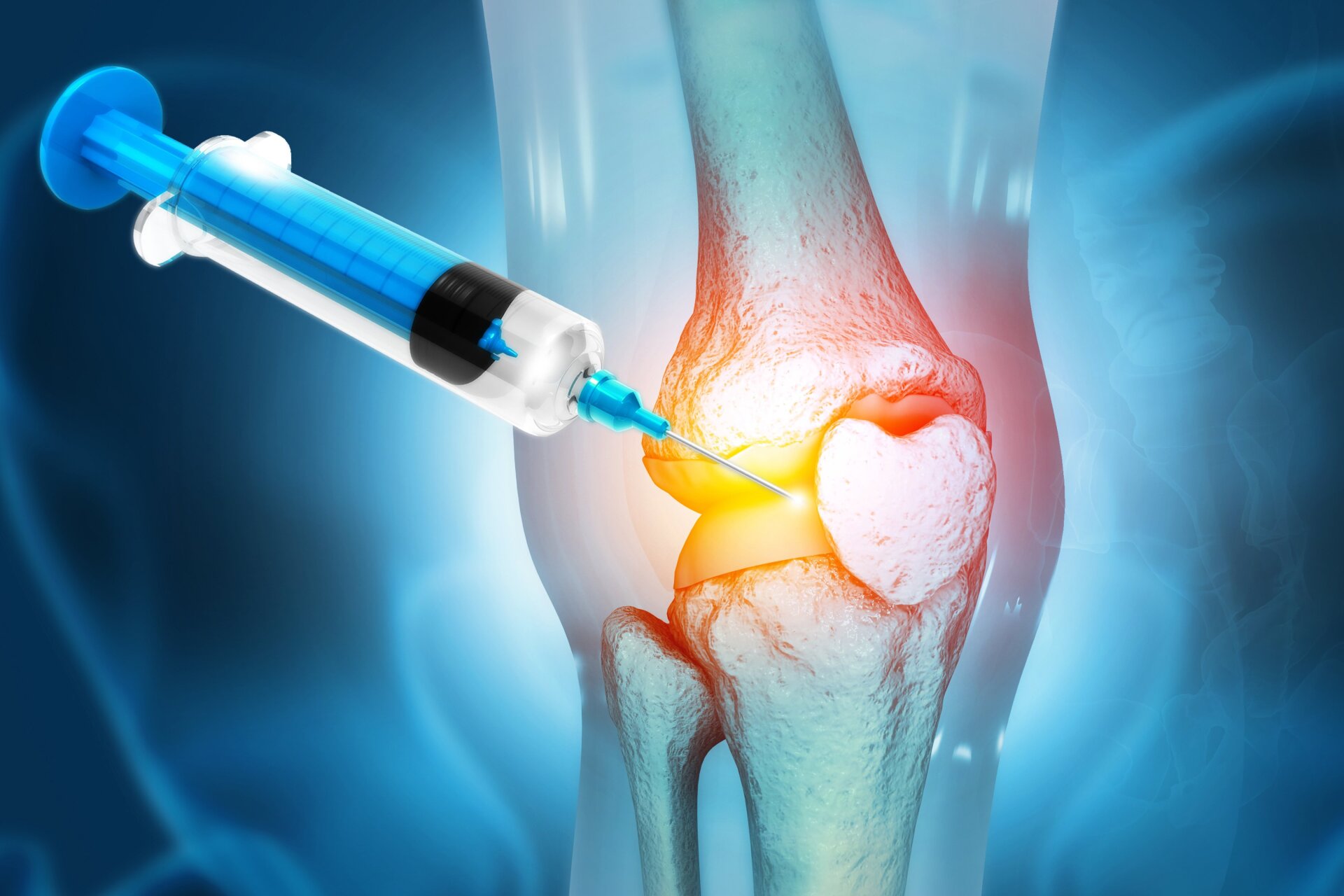
A team of researchers working at Stanford University have recently discovered a way to regrow ageing cartilage, raising hopes for arthritis treatments that are likely to make joint replacements become old-fashioned. In this Cover Story, PharmaTimes Editor, MORGAN NWANGUMA writes that the few orthopaedic centres available in the country – mainly (Abuja and Lagos) have however, been offering advanced orthopaedic care, including joint replacements as well as other forms of specialised arthritis treatments.
Arthritis care in Nigeria is provided through a growing network of rheumatologists, orthopaedic surgeons, and specialised clinics, particularly in urban centres like Lagos and Abuja. While arthritis (often referred to locally as awoka or aromoleegun in Yoruba) is common among the elderly, access to specialised care is limited by a low number of rheumatologists, with only about 30 specialists serving a population of over 200 million.
At the same time however, researchers at Stanford Medicine have identified a promising treatment that could reverse cartilage loss in ageing joints and help prevent arthritis following knee injuries. By blocking a protein associated with the ageing process, the therapy restored healthy, shock-absorbing cartilage in older mice and in injured joints, leading to marked improvements in movement and joint function. Human cartilage samples taken during knee replacement surgeries also began regenerating when exposed to the treatment.
In the study led by researchers at Stanford Medicine, an injection designed to block the ageing-related protein reversed the natural loss of knee cartilage in older mice. The same therapy also prevented arthritis from developing after knee injuries similar to Anterior Cruciate Ligament (ACL) tear injuries, which frequently occur among athletes and recreational exercisers. Researchers note that an oral version of the treatment is already undergoing clinical trials aimed at treating age-related muscle weakness.
Human cartilage samples obtained from knee replacement procedures also showed encouraging results. These samples contained both the supportive extracellular matrix of the joint and the cartilage-producing cells known as chondrocytes. Once treated, the tissue began generating new, functional cartilage.
Taken together, the findings suggest that cartilage damaged by ageing or arthritis might one day be restored through either a pill or a targeted injection. If the approach proves effective in humans, it could significantly reduce or even eliminate the need for joint replacement procedures.

A Direct Approach to Osteoarthritis
Osteoarthritis is a degenerative joint condition affecting roughly one in five adults in the United States and costing about $65 billion annually in direct healthcare expenses. Current treatments primarily focus on relieving pain or surgically replacing damaged joints. At present, no approved medications can slow or reverse the underlying cartilage deterioration.
The new therapy aims to address the root cause of the disease rather than simply treating its symptoms, potentially transforming how osteoarthritis is managed.
The Role of a Key Ageing Enzyme
At the centre of the research is a protein known as 15PGDH. Scientists describe it as a “gerozyme” because its levels increase as the body ages. Gerozymes were first identified by the same research team in 2023 and are believed to drive the gradual decline in tissue function associated with ageing.
Studies in mice have shown that higher levels of 15PGDH are linked to reduced muscle strength with age. Blocking the enzyme with a small molecule increased muscle mass and endurance in older animals. Conversely, forcing young mice to produce more of the protein caused their muscles to shrink and weaken. The enzyme has also been associated with regenerative processes in bone, nerve, and blood cells.
In many tissues, regeneration occurs through the activation and specialization of stem cells. Cartilage, however, appears to behave differently. Instead of relying on stem cells, cartilage-producing chondrocytes adjust their gene activity, shifting into a more youthful state that enables the formation of new cartilage.
A Fresh Path to Tissue Restoration
“This is a new way of regenerating adult tissue, and it has significant clinical promise for treating arthritis due to ageing or injury,” said Helen Blau, PhD, professor of microbiology and immunology. “We were looking for stem cells, but they are clearly not involved. It’s very exciting.”
Helen M. Blau, who directs the Baxter Laboratory for Stem Cell Biology and holds the Donald E. and Delia B. Baxter Foundation Professorship, and Nidhi Bhutani, PhD, an associate professor of orthopaedic surgery, served as the senior author of the study. The findings were published in the journal Science.
Mamta Singla, PhD, an instructor of orthopaedic surgery, and Yu Xin (Will) Wang, PhD, a former postdoctoral scholar, were the lead authors. Wang has since joined the Sanford Burnham Prebys Medical Discovery Institute in San Diego as an assistant professor.
Striking restoration of Joint Cartilage
“Millions of people suffer from joint pain and swelling as they age,” Bhutani said. “It is a huge unmet medical need. Until now, there has been no drug that directly treats the cause of cartilage loss. But this gerozyme inhibitor causes a dramatic regeneration of cartilage beyond that reported in response to any other drug or intervention.”
The human body contains three primary types of cartilage. Elastic cartilage is soft and flexible, forming structures such as the outer ear. Fibrocartilage is dense and resilient, helping to absorb shock in areas like the spaces between spinal vertebrae. Hyaline cartilage is smooth and glass-like, enabling joints – including the hips, knees, shoulders, and ankles to move with minimal friction. This variety, also known as Articular cartilage, is the type most often damaged in Osteoarthritis.
Why Cartilage Rarely Regenerates
Osteoarthritis develops when joints experience prolonged stress from ageing, injury, or obesity. During this process, cartilage-producing cells called chondrocytes begin releasing inflammatory molecules and breaking down Collagen, the main structural component of cartilage. As collagen deteriorates, cartilage gradually becomes thinner and softer. The resulting inflammation leads to swelling and pain – two defining features of the disease.
Under normal conditions, Articular cartilage has a very limited ability to regenerate. Although some stem or progenitor cells capable of forming cartilage have been identified in bone, comparable cells have not been reliably found within articular cartilage itself.
Linking Ageing, Prostaglandins, and Tissue Repair
Earlier work from the laboratory of Helen M. Blau revealed that Prostaglandin E2 plays a crucial role in the function of muscle stem cells. The enzyme 15-PGDH breaks down prostaglandin E2. By blocking 15-PGDH or increasing levels of prostaglandin E2, researchers previously promoted the repair of damaged muscle, nerve, bone, colon, liver, and blood cells in young mice.
These findings prompted the research team to investigate whether the same biological pathway might influence cartilage ageing and joint deterioration. When they compared knee cartilage from young and older mice, they discovered that levels of 15-PGDH nearly doubled with age.

Regenerating Cartilage in Ageing Knees
To test the idea, researchers injected older mice with a small molecule that blocks 15-PGDH. Initially, the drug was administered into the abdomen to affect the entire body, and later it was injected directly into the knee joint. In both cases, cartilage that had thinned and lost function with age became thicker across the joint surface.
Further analysis confirmed that the regenerated tissue was true Hyaline cartilage rather than the less effective Fibrocartilage.
“Cartilage regeneration to such an extent in aged mice took us by surprise,” Bhutani said. “The effect was remarkable.”
Protecting Joints after ACL-Like Injuries
The researchers also observed similar protective effects in mice with knee injuries resembling Anterior Cruciate Ligament (ACL) tear injuries, which commonly occur in sports that involve sudden stopping, pivoting, or jumping. Although these injuries can be surgically repaired, roughly half of affected individuals eventually develop Osteoarthritis in the damaged joint within about 15 years.
Mice treated with twice-weekly injections of a gerozyme inhibitor for four weeks following injury were significantly less likely to develop Osteoarthritis. By contrast, animals that received a control treatment showed nearly double the levels of the ageing-related enzyme 15-PGDH compared with uninjured mice and developed osteoarthritis within four weeks.
The treated mice also demonstrated better mobility, moving more naturally and placing greater weight on the injured leg than the untreated animals.
“Interestingly, prostaglandin E2 has been implicated in inflammation and pain,” Blau said. “But this research shows that, at normal biological levels, small increases in prostaglandin E2 can promote regeneration.”
Reprogramming Cartilage Cells without Stem Cells
Further investigation revealed that chondrocytes in older mice displayed higher activity in genes linked to inflammation and the conversion of cartilage into bone, while genes responsible for cartilage formation were less active. Treatment with the inhibitor altered these patterns significantly.
One cluster of chondrocytes producing 15-PGDH along with cartilage-degrading genes declined from 8% to 3%. Another group associated with the formation of Fibrocartilage dropped from 16% to 8%. Meanwhile, a third population, which did not produce 15-PGDH and instead expressed genes linked to the development of Hyaline cartilage and the maintenance of the extracellular matrix, rose from 22% to 42%.
These shifts suggest that cartilage cells can revert to a more youthful functional state without the involvement of stem or progenitor cells.
Evidence from Human Cartilage Samples
The researchers also examined cartilage obtained from patients undergoing total knee replacement surgery due to Osteoarthritis. After one week of treatment with the 15-PGDH inhibitor, the tissue showed fewer chondrocytes producing the enzyme, reduced expression of genes linked to cartilage breakdown and fibrocartilage formation, and early indications of regeneration in Articular cartilage.
“The mechanism is quite striking and really shifted our perspective about how tissue regeneration can occur,” Bhutani said. “It’s clear that a large pool of already existing cells in cartilage are changing their gene expression patterns. And by targeting these cells for regeneration, we may have an opportunity to have a bigger overall impact clinically.”
Looking Toward Human Trials
Blau also stated, “Phase 1 clinical trials of a 15-PGDH inhibitor for muscle weakness have shown that it is safe and active in healthy volunteers. Our hope is that a similar trial will be launched soon to test its effect in cartilage regeneration. We are very excited about this potential breakthrough. Imagine regrowing existing cartilage and avoiding joint replacement.”
Also, scientists from the Sanford Burnham Prebys Medical Discovery Institute partook in the study.
The project was backed by funding from the American National Institutes of Health (grants R01AR070864, R01AR077530, R01AG069858 and R00NS120278), the Baxter Foundation for Stem Cell Biology, the Li Ka Shing Foundation, the Stanford Cardiovascular Institute, the Milky Way Research Foundation, the Canadian Institutes of Health Research, a Stanford Translational Research and Applied Medicine Pilot grant, a GlaxoSmithKline Sir James Black Postdoctoral Fellowship, and a Stanford Dean’s Postdoctoral Fellowship.
Blau, Bhutani, and other colleagues are inventors on patent applications owned by Stanford University linked to 15-PGDH inhibition in cartilage and tissue renewal, which are licensed to Epirium Bio. Blau is among the founders of Myoforte/Epirium and holds equity and stock options in the company.



 English