

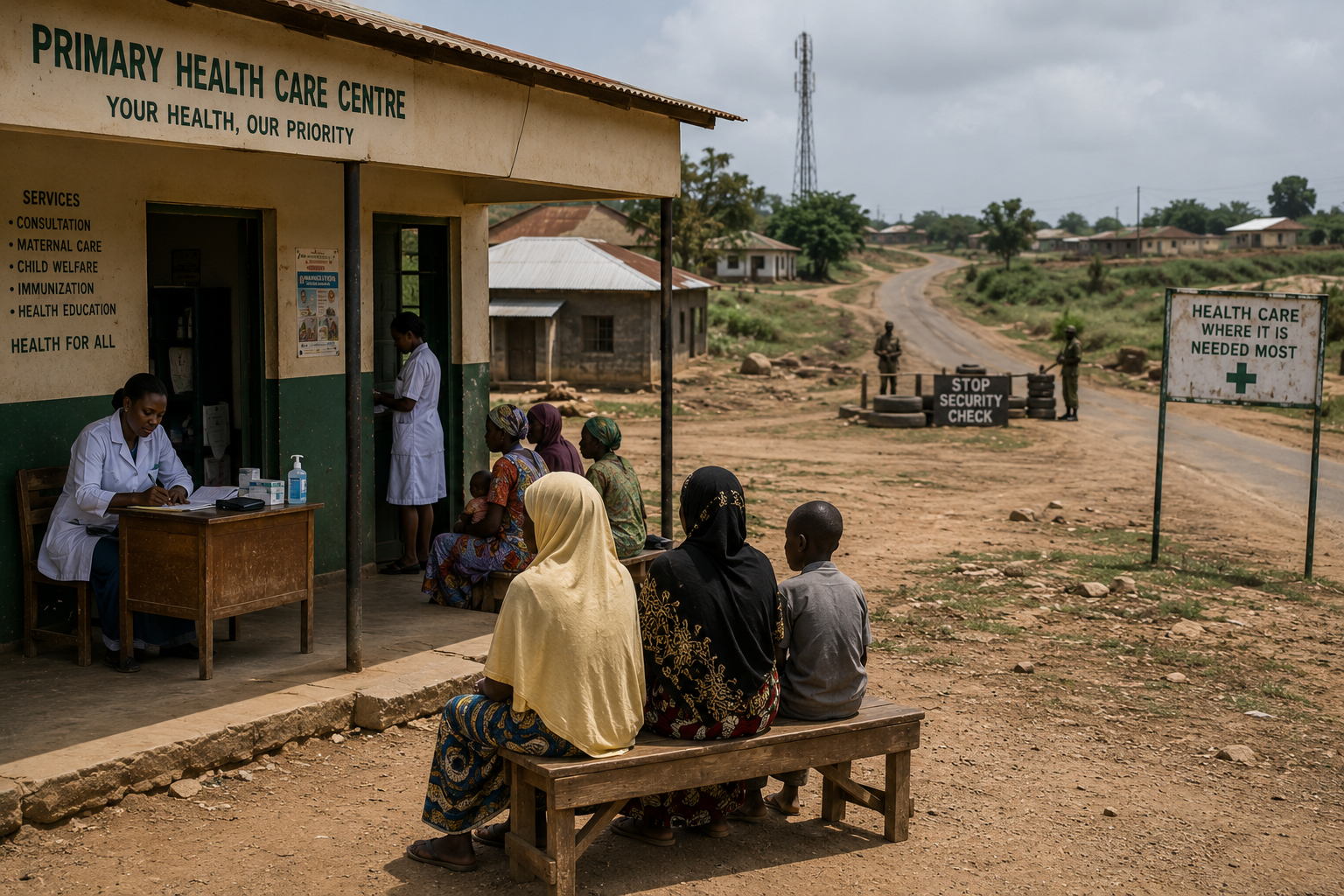
Recently, stakeholders in the nation’s health sector came together in a forum – to examine the solutions to healthcare access and workforce challenges. In the conference themed “Universal Health Coverage in Nigeria: Overcoming Access and Workforce Gaps in the Face of Insecurity,” PharmaTimes Editor, MORGAN NWANGUMA writes that participants identified insecurity, workforce shortages, inadequate funding and weak constitutional backing as major impediments to attaining universal health coverage (UHC) all over the country.
Universal Health Coverage (UHC) in Nigeria has of late witnessed some sort of appreciable expansion through the National Health Insurance Authority (NHIA) and the Basic Health Care Provision Fund (BHCPF), reaching an improved enrollment milestone of over 22 million citizens. However, heavy reliance on out-of-pocket spending and severe workforce shortages continue to challenge full national access. Added to this, stakeholders have also established that various other major drivers in recent years have constituted a devastating roadblock on the way to achieving the desired outcomes. They point to insecurity, workforce shortages, inadequate funding and weak constitutional backing as the chief causative factors of this impediment.

Crisis persists
And so it could be argued that Nigeria has recorded a significant milestone on its journey toward Universal Health Coverage (UHC), with national health insurance enrollment growing by a significant 35% increase from 16.2 million in 2023 to the current 22.03 Nigerians. It is worthy of note therefore to acknowledge that the National Health Insurance Authority (NHIA) under the leadership of Dr. Kelechi Ohiri, with the support of the Coordinating Minister of Health and Social Welfare, Prof. Muhammad Ali Pate, has continued to strengthen access to quality, affordable healthcare across the country. Still stakeholders insist that all the gains notwithstanding, a crisis situation remains with us – thereby whittling down the immense gains that would have been the lot of the citizenry considering all efforts and potentials that exist.
Health experts, policymakers and academics have as a result called for urgent reforms to address the country’s widening healthcare access and workforce gaps, warning that insecurity and the migration of health professionals continue to undermine efforts to achieve universal health coverage.
ALSO READ: Lassa Fever: Deaths Surge Amid Strained Facilities and Staff Shortages
The concerns were raised at the fourth Annual Scientific Conference of the College of Health Sciences, Usmanu Danfodiyo University, Sokoto (UDUS), where participants examined practical strategies for strengthening Nigeria’s health system. The conference, themed “Universal Health Coverage in Nigeria: Overcoming Access and Workforce Gaps in the Face of Insecurity,” featured about 120 scholarly papers and was chaired by renowned scholar, Prof. B.B. Shehu.
Speaking at the event, Sokoto State Commissioner for Health, Faruk Abubakar-Wurno, highlighted the unequal distribution of healthcare workers across the state, particularly between urban and rural primary healthcare centres (PHCs). He noted that while some urban PHCs have as many as 80 health workers, certain rural facilities operate with only one staff member, a disparity that continues to limit access to quality healthcare in underserved communities.
Tackling the challenges
To address the challenge, he said the state government introduced a two-year compulsory service policy for healthcare professionals trained through state-funded scholarship programmes.

According to him, the government has also awarded 500 scholarships for midwifery training, renovated more than 160 primary healthcare centres and restored services in 92 facilities throughout the state. He added that ongoing interventions are aimed at making all 244 PHCs in Sokoto fully operational prior to the end of the year to improve healthcare delivery across the state.
Former member of the House of Representatives and former Sokoto State Commissioner for Health, Shehu Balarabe-Kakale, called for constitutional amendments that would make healthcare a fundamental right for every Nigerian.
He was of the strong opinion that healthcare remains a non-justiciable socio-economic objective under Chapter Two of the Constitution – a limitation that weakens accountability and reduces government commitment to adequate healthcare funding and service delivery.
Balarabe-Kakale also lamented Nigeria’s failure to meet the 15 per cent health budget allocation target agreed under the 2001 Abuja Declaration despite increasing healthcare needs. He stressed that stronger legislation and sustained investment in the health sector are essential to achieving universal health coverage and tackling the country’s persistent workforce shortages.
Persistent Insecurity
Addressing the impact of insecurity, the Wamban Isa, Alhaji Nasiru Yahaya-Isa, revealed that about 40 per cent of primary healthcare centres in Sokoto East are facing severe operational challenges due to recurring bandit attacks.
He said the persistent insecurity has forced many residents to abandon their communities, health facilities and schools for safer towns such as Sokoto and Isa, placing additional pressure on existing public services.
According to him, the displacement has also disrupted farming and commercial activities, deepened poverty and worsened sanitation conditions, leading to increased cases of open defecation. Yahaya-Isa urged governments and development partners to prioritise healthcare delivery in conflict-affected and hard-to-reach communities to ensure equitable access to essential health services.
The Sultan of Sokoto, Alhaji Sa’ad Abubakar, represented by the District Head of Wurno, Alhaji Kabiru Cigari, emphasized the need for innovative approaches to delivering healthcare in areas affected by insecurity. In his keynote address, the Director of Planning, Research and Statistics at the National Health Insurance Authority (NHIA), Abubakar Kurfi, outlined measures for accelerating universal health coverage nationwide.
He urged governments to take advantage of local government financial autonomy to increase funding for primary healthcare and expand access to health insurance.
Kurfi also advocated stronger collaboration among the three tiers of government, evidence-based policymaking and strategic planning to ensure a smooth transition from donor-funded health programmes.
He further recommended strategic purchasing of health services, stronger accountability systems, sustained investment in workforce development and greater community participation in health programmes.
The Minister of Defence, Gen. Christopher Musa, linked the country’s healthcare challenges to the prevailing security situation, stressing that meaningful progress toward universal health coverage would depend on restoring peace and stability.
Represented by Col. A.D. Akinyele, the minister said tackling insecurity requires a whole-of-society approach involving government institutions, local communities and other critical stakeholders.
Earlier, the Provost of the College of Health Sciences, UDUS, Abdulganiyu Jimoh, said the conference was organised to foster collaboration, encourage knowledge exchange and identify practical solutions to the nation’s healthcare challenges. He observed that insecurity and the growing “japa” phenomenon have significantly worsened shortages of healthcare workers, while reaffirming the college’s commitment to producing competent health professionals and advancing medical research.



 English