

By Morgan Nwanguma
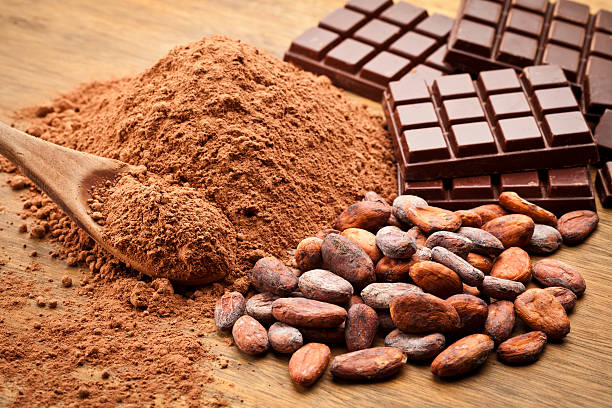
Daily cocoa extract supplementation was found to lower key inflammation markers in older adults, suggesting potential heart-protective benefits. The findings highlight the importance of flavanol-rich, plant-based foods in promoting healthy ageing.
Could cocoa flavanols help reduce inflammation and prevent chronic, age-related diseases? Researchers from Mass General Brigham and collaborators explored this question in the COcoa Supplement and Multivitamin Outcomes Study (COSMOS). The study examined five markers of age-related inflammation in participants who took daily cocoa extract supplements for several years. Results showed a decrease in hsCRP—a biomarker linked to cardiovascular disease risk—among those taking the supplement, pointing to cocoa’s anti-inflammatory potential as a possible explanation for its heart benefits. The findings were published in Age and Ageing.
As scientists search for nutritional strategies to slow “inflammaging”—the chronic, low-grade inflammation that accompanies ageing—cocoa extract has gained attention. Earlier, smaller studies have shown that cocoa flavanols, naturally occurring compounds found in cocoa beans, berries, grapes, tea, and other plant-based foods, can help reduce inflammation. The large-scale COSMOS trial builds on this evidence, investigating how cocoa extract may influence cardiovascular health and whether its anti-inflammatory properties play a key role in those effects.

“Our interest in cocoa extract and inflammaging started on the basis of cocoa-related reductions in cardiovascular disease,” said corresponding author Howard Sesso, ScD, MPH, associate director of the Division of Preventive Medicine and associate epidemiologist at Brigham and Women’s Hospital, a founding member of the Mass General Brigham healthcare system. “We also appreciate the important overlap between healthy ageing and cardiovascular health, where ageing-related inflammation can harden arteries and lead to cardiovascular disease. Because of that, we wanted to see whether multi-year cocoa extract supplementation versus a placebo could modulate inflammaging — and the data suggests it does.”
From 2014 to 2020, Brigham and Women’s Hospital led the COSMOS trial—a large, randomized, double-blind, placebo-controlled study involving 21,442 adults aged 60 and older. The trial found that daily cocoa extract supplementation was associated with a 27% reduction in deaths from cardiovascular disease.
In the latest follow-up analysis, researchers examined blood samples from 598 COSMOS participants to assess several biomarkers linked to “inflammaging.” These included three pro-inflammatory proteins (hsCRP, IL-6, and TNF-α), one anti-inflammatory protein (IL-10), and one immune-modulating protein (IFN-γ). Comparing levels at baseline and after one and two years, they observed that hsCRP decreased by 8.4% annually in participants taking cocoa extract versus placebo, while the other biomarkers remained largely stable or rose slightly.
“Interestingly, we also observed an increase in interferon-γ, an immune-related cytokine, which opens new questions for future research,” said senior author Yanbin Dong, MD/PhD, Director of the Georgia Prevention Institute (GPI) and cardiologist/population geneticist at the Medical College of Georgia/Augusta University. “While cocoa extract is not a replacement for a healthy lifestyle, these results are encouraging and highlight its potential role in modulating inflammation as we age.”

Authorship:
Along with Dr. Howard Sesso, Mass General Brigham contributors include Sidong Li, Rikuta Hamaya, Allison Clar, Pamela M. Rist, and JoAnn E. Manson. From Augusta University, authors include Dr. Dayong Dong, Haidong Zhu, and Ying Huang.
Disclosures:
Drs. Manson and Sesso received investigator-initiated grants from Mars Edge, a division of Mars Incorporated focused on nutrition research and products, to support study infrastructure and provide COSMOS study pills and packaging. Pfizer Consumer Healthcare (now Haleon) also supplied a portion of the study pills and packaging during the trial.
Dr. Sesso additionally received investigator-initiated grants from Pure Encapsulations, American Pistachio Growers, and Haleon, as well as honoraria and/or travel support for lectures from the Council for Responsible Nutrition, BASF, Haleon, and the NIH during the course of the study.
No other authors reported conflicts of interest related to this research.
Funding:
This work was supported by the National Institutes of Health (NIH) under grant HL157665. The COcoa Supplement and Multivitamin Outcomes Study (COSMOS) also received investigator-initiated funding from Mars Edge, which included infrastructure support and the donation of study pills and packaging. Additional support was provided by Pfizer Consumer Healthcare (now Haleon) through the partial donation of study materials. COSMOS is further supported in part by the NIH under grants AG050657, AG071611, and EY025623. Neither Mars Edge nor Haleon had any role in the study design, data collection, analysis, interpretation, or manuscript preparation.

 English