

By Deborah Bamisaye
“Wait! Wait!! Wait!!! What on earth is ‘Black’ and still has something good hiding inside it?
I mean, whenever we hear the word good, we don’t exactly expect Black to be the word standing beside it.
So now you’re telling me that something called Black could actually be good for me?
“What do you mean? I don’t understand…”
“You mean it’s a seed?”
“Oh! I didn’t quite get that!”
“So, what about it?” Ahhh… now we are getting somewhere. Because this little black seed may have a much bigger story to tell than its size suggests.
Before we dive in, catch up on our previous episode here
Black Seed: The Little ‘Black’ With a Very Big Reputation
“Black seed?”
“Yes.”
“Those tiny black things?”
“Exactly.”
“And people actually eat those?”
That question may sound funny, but perhaps it is not as strange as it seems. Because tucked away in many kitchens, spice jars and traditional food practices are tiny black seeds that have been attracting attention for generations.

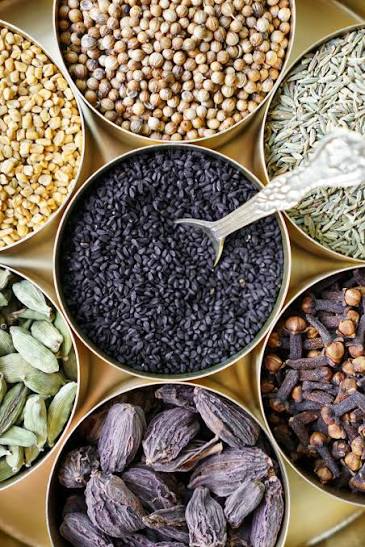
They are called black seed. Also known as black cumin, they come from a plant scientifically known as ‘Nigella sativa.’ ‘Nigeria?’ No! I said, ‘Nigella…’ Oh okay! I see! Do you know that many people talk about it with confidence because they believe they have discovered the secret to human longevity? You probably already know what comes next:
“Black seed can do this.”
“Black seed can do that.”
“Black seed is good for everything!”
At this point, the little seed almost needs its own publicist. But let’s pause because there is something much more interesting than the extraordinary claims surrounding black seed.
What does the evidence actually say?
And that is where our journey takes a fascinating turn.
Meet the Little Black Seed
Black seed is tiny – almost ridiculously tiny. But its size tells us absolutely nothing about the chemistry taking place inside it. Nigella sativa has been used traditionally for a very long time, particularly across parts of the Middle East, North Africa and Asia.
The seeds contain a mixture of plant compounds, oils and other substances that have attracted considerable scientific interest.
One compound in particular has received plenty of attention: It’s called, ‘Thymoquinone.’ It is one of the major bioactive compounds associated with black seed, and researchers have investigated it for antioxidant, anti-inflammatory and other biological activities. That sounds impressive. Isn’t it? But here comes the sentence that every health magazine reader should learn to love: ‘Interesting is not the same thing as proven.’ That distinction can save us from a mountain of misinformation.
The Black Seed Hype
Ask around and you may hear black seed described as a remedy for an astonishing list of conditions.
Some claims are harmless exaggerations.
Others go much further.
And this is where we have to put the brakes on.
Scientific studies have investigated Nigella sativa in relation to several health outcomes, including areas involving blood glucose, blood pressure, inflammation and other conditions.
Some findings are promising. But systematic reviews have also pointed out a major problem: the quality of evidence is often low or very low, and better-designed, larger clinical trials are still needed before many health claims can be considered firmly established.
In simple English: Researchers have found reasons to keep studying black seed. They have not found a reason for us to declare black seed a cure-all. And that distinction matters a great deal. This is because when a promising food becomes a “miracle cure” in public conversation, something very important gets lost: science.
So, Is Black Seed Useless?
Absolutely not! And this is where we need to avoid another mistake. There is a strange habit in health conversations.
If something is not a miracle cure, people sometimes conclude that it must be useless. But nutrition doesn’t work that way. A food does not have to cure a disease before it can have nutritional value.
Black seed can simply be…a food, a seed, a spice; a source of plant compounds; something that can contribute to dietary variety. And sometimes, that is more than enough.
The World Health Organization’s (WHO) current guidance on healthy diets does not tell us to search endlessly for one extraordinary food. Instead, it emphasises four principles: adequacy, balance, moderation and diversity.

WHO also recommends a wide variety of nutritious foods, including whole grains, vegetables, fruits, pulses, nuts and seeds. That changes the question completely. Instead of asking: “What disease can black seed cure?” Perhaps we should sometimes ask: “How can black seed fit into an otherwise nourishing diet?”
Now, that is a much healthier question.
And Here Is Where Black Seed Gets Really Interesting
You see, our bodies do not sit down every morning and announce: “Today, I require black seed.” Neither does the body say: “I refuse to function unless I receive chia seeds before noon.” Our bodies require nutrients.
They need energy.
They need protein.
They need fats.
They need carbohydrates.
They need vitamins and minerals.
They need fibre.
They need water and they need these things in appropriate amounts and combinations. That is why one food rarely tells the whole story. A seed may bring certain nutrients and plant compounds to the table. Another food brings something else.
A vegetable contributes something different.
A fruit contributes something different.
Beans contribute something different.
Whole grains contribute something different. Fish, eggs or other protein sources contribute something different.
And suddenly, the nutritional picture becomes much bigger than one tiny seed. There is more to learn about the Black seed. The next edition is a never-to-be missed one. You sure will be here, won’t you?
 English