
By Evans Matthews
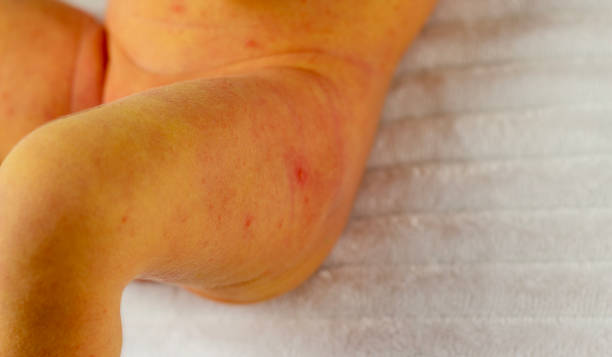
A yellowish tinge to a newborn’s skin or eyes can be alarming for new parents. Known medically as neonatal jaundice, the condition affects more than half of all babies worldwide in their first week of life. In most cases, it is harmless and temporary. But in some situations, jaundice can signal a serious health risk that requires urgent attention.
Jaundice occurs when there is a buildup of bilirubin – a yellow pigment produced when red blood cells break down – in a baby’s blood. Newborn livers are still immature and may not efficiently process and eliminate bilirubin. According to the World Health Organization (WHO), neonatal jaundice is “one of the most common clinical conditions requiring medical evaluation in newborns globally.”
There are two broad categories of jaundice: physiological and pathological. Physiological jaundice typically appears between the second and fourth day of life and resolves on its own within one to two weeks. Pathological jaundice, however, may appear within the first 24 hours, rise rapidly, or persist longer than expected. This form is more concerning and may be linked to blood group incompatibility, infections, enzyme deficiencies, or liver disorders.
Dr. Maria Santos, a neonatologist based in São Paulo, explains, “The timing of jaundice is very important. Any yellowing noticed in the first 24 hours of life should never be ignored; it’s a red flag that warrants immediate evaluation.”
Globally, the burden of severe neonatal jaundice is uneven. In high-income countries, early postnatal screening and access to treatment have made complications rare. In contrast, low-and-middle-income countries still record significant cases of preventable brain damage and infant deaths related to untreated jaundice. A 2023 global health review estimated that severe neonatal hyperbilirubinemia contributes to thousands of newborn deaths annually, particularly in sub-Saharan Africa and South Asia.
So when should parents worry? Warning signs include jaundice spreading to the arms, legs, palms, or soles; poor feeding; lethargy; high-pitched crying; arching of the body; or seizures. “These symptoms may indicate dangerously high bilirubin levels that can cross into the brain,” says Dr. Aisha Khan, a pediatric neurologist in London. “If untreated, this can lead to kernicterus, a form of permanent brain injury.”
Treatment depends on the severity and cause. The most common and effective therapy is phototherapy, where the baby is placed under special blue lights that help break down bilirubin so it can be excreted. Phototherapy is safe, non-invasive, and widely used across the world. In more severe cases, especially those caused by blood incompatibility, an exchange transfusion may be required – a procedure where the baby’s blood is gradually replaced to rapidly reduce bilirubin levels.
Prevention and early detection remain key. Many countries now recommend routine bilirubin screening before newborn discharge. Breastfeeding support is also crucial, as poor feeding can worsen jaundice. “Well-fed babies clear bilirubin faster,” notes Dr. Santos. “Breastfeeding should be encouraged, not stopped, in most cases of jaundice.”
Ultimately, neonatal jaundice is usually a normal part of newborn adaptation to life outside the womb. But awareness saves lives. With timely recognition, proper monitoring, and appropriate treatment, even severe jaundice can be managed effectively, ensuring newborns everywhere get a healthy start to life.



 English