

By Deborah Bamisaye
Hey there! How’s your day going? Can I have a word with you please? Move closer, I don’t want everyone to hear me. You mean you can’t hear me? Omo, you need to become an expert in listening to whispers o. There you go! Now, you are talking – I knew you were joking when you said you couldn’t hear me. Don’t worry, I will gist you on that one later but first, let’s take a listen to: ‘The Final Whisper from The Kitchen.’ Hmmm! Perhaps, after all these months, the kitchen has one last thing to say:
No, not: “Put me in the fridge.”
Not: “Keep me out.”
Not: “Don’t store me beside that one.”
Something much simpler and that is: “Pay attention.”
Pay attention to where food belongs.
Pay attention to how it is handled.
Pay attention to how long it has been sitting around.
Pay attention to your refrigerator’s temperature.
Pay attention to leftovers.

And most importantly…don’t confuse “looks fine” with “is definitely safe,” because food safety rarely announces itself with a drumroll. Sometimes…the most important decision you make in the kitchen is the quiet one. “This has been handled properly.” Or…“I’m not willing to take the risk.” And perhaps that is where our refrigeration journey should end. Not with fear; not with suspicion but with awareness because a refrigerator can preserve food…but only good habits can protect the people who eat it.
What the Experts Want You to Know
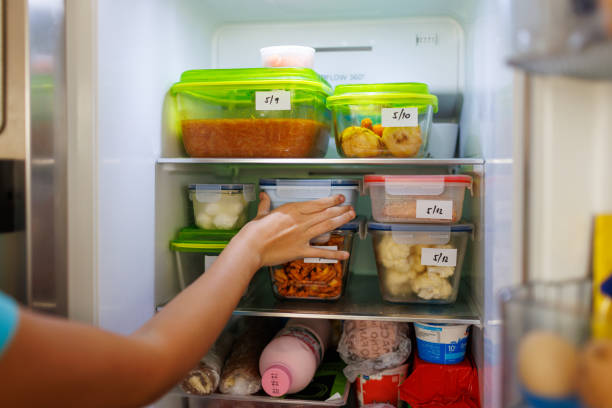
The World Health Organization has a simple but powerful message: cold does not mean forever. Refrigeration slows the growth of many microorganisms, but it does not stop them completely. That is why WHO recommends keeping the refrigerator below 5°C, refrigerating cooked and perishable foods promptly, and not leaving cooked food at room temperature for more than two hours. Also, WHO points out that some bacteria can grow at refrigeration temperatures. Confirming what I have said earlier in one of the editions of this series, which is that: “The refrigerator is a pause button not a time machine.”
WHO’s broader Five Keys to Safer Food are:
- Keep clean.
- Separate raw and cooked.
- Cook thoroughly.
- Keep food at safe temperatures.
- Use safe water and raw materials.
What about us? Here in Nigeria, the Nigeria Centre for Disease Control and Prevention echoes the same principle: store leftovers properly, avoid eating food that has been left out for long periods, cook food thoroughly, and prevent cross-contamination. In other words…Your refrigerator can slow the clock. But it cannot stop the clock. And that is precisely why time, temperature and proper handling must work together.
So, my dear, the next time you open that refrigerator door, don’t just look for what needs to go in. Look at what is already there. Ask yourself:
- How long has it been here?
- How was it handled?
- Has it been kept at the right temperature?
- And am I keeping it because it is genuinely safe or simply because I hate wasting food?
Throwing food away is waste, I know but sometimes, throwing it away is wisdom. And that, my dear readers, is a lesson worth carrying beyond the refrigerator. It’s time to draw the curtains on this topic here. It has been a long ride and it’s beautiful having you around.
With all that has been taught, I have no doubt you’ll do the needful. That’s Great! Until our next health conversation…Stay safe. Stay healthy and keep your kitchen working for you. Cheers!


 English