

In an emergency, every minute matters. For a woman experiencing complications during childbirth, a victim of a road crash or a child struggling to breathe, the time between the onset of an emergency and receiving appropriate care can have life-changing consequences.
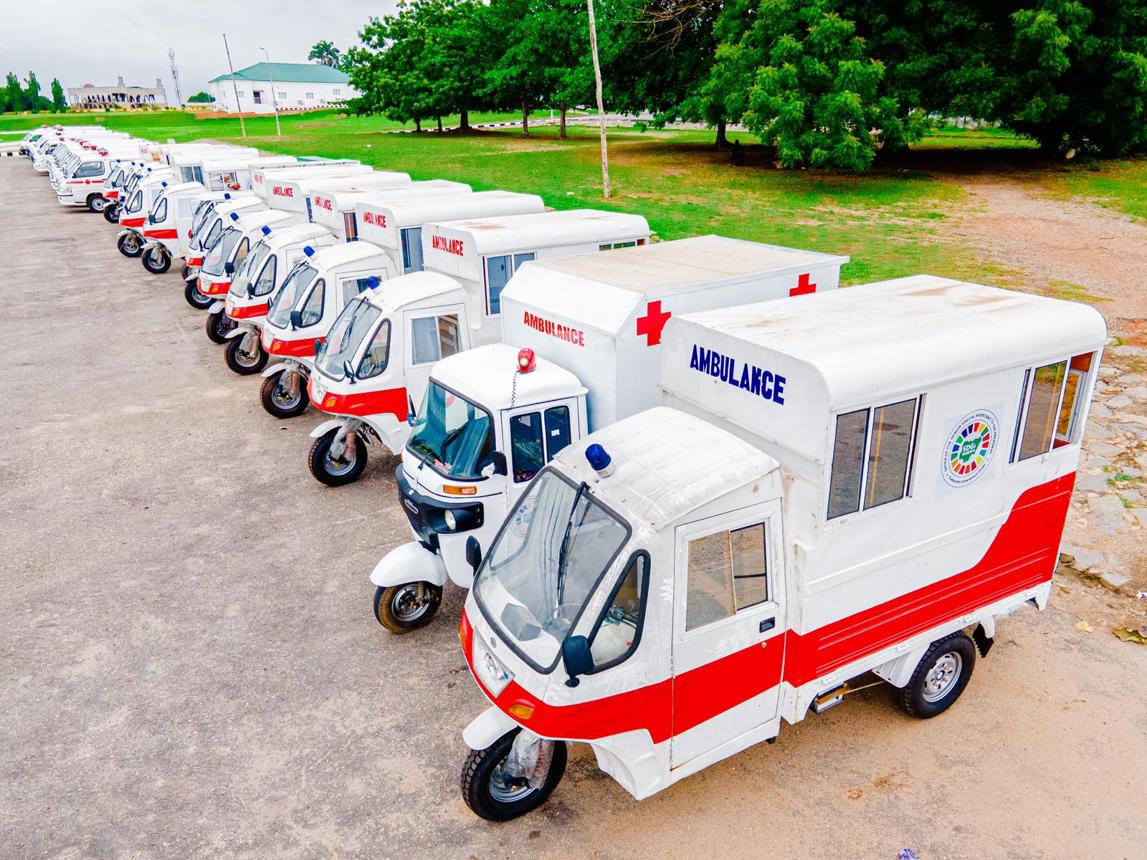
Against this backdrop, the Federal Government has deployed 13 ambulances to Ogun State as part of efforts to strengthen emergency medical services and improve access to timely, life-saving care.
The deployment, announced on September 4, includes three Advanced Life Support (ALS) ambulances, one Basic Life Support (BLS) ambulance and nine tricycle ambulances. The vehicles are being deployed to selected tertiary health facilities, including the Federal Medical Centre, Abeokuta and Olabisi Onabanjo University Teaching Hospital, as well as selected high-volume and remote secondary and primary healthcare facilities.
The intervention comes under the National Emergency Medical Services and Ambulance System (NEMSAS), which the Federal Government says is designed to strengthen not only emergency transportation but also first-responder capacity, communication and coordination.
According to the Minister of State for Health and Social Welfare, Dr Iziaq Adekunle Salako, the government has acquired 145 tricycle ambulances, six boats, 15 BLS ambulances and 79 ALS ambulances as part of the first phase of a broader national effort to strengthen emergency medical services.
The Ministry acknowledges that emergency care goes beyond putting an ambulance on the road. Effective emergency response requires trained personnel, functioning communication and dispatch systems, pre-hospital care, reliable referral pathways and hospitals equipped to receive patients.

The Minister stressed that the value of the newly deployed ambulances would ultimately be measured by their performance during real emergencies, not simply their presence at a commissioning ceremony. He also called for proper deployment, maintenance, monitoring and accountability to ensure the vehicles remain available for genuine emergencies.
For Nigeria, this is an important distinction. An ambulance is not simply a means of moving a patient from one location to another. When properly equipped and staffed, it can become the first point of emergency medical care is helping to stabilize a patient and connect them to definitive treatment as quickly as possible.
The Ogun deployment is therefore a welcome step. But its greatest success will be seen not in the number of ambulances purchased, but in the number of emergencies where those ambulances arrive on time, provide appropriate care and help patients reach the right facility before it is too late.
READ ALSO: Uyo Residents Told: Dial 122 for Free Ambulance in Emergencies


 English