
By Morgan Nwanguma
A simple liquid treatment could spare many young children the pain, anxiety and complications associated with traditional cavity treatment.
A major U.S. clinical trial has discovered that 38% silver diamine fluoride (SDF) halted tooth decay in more than half of the treated baby teeth when applied every six months. The treatment takes only seconds to apply and does not require drilling, injections or sedation. Its main drawback is that it permanently turns the decayed portion of the tooth dark.
A Simple Alternative to Traditional Cavity Treatment
Untreated cavities send thousands of young children in the United States to emergency departments every year. Because emergency doctors generally cannot treat the underlying dental problem, children may continue to experience pain and infection. Some eventually require surgery under general anesthesia.
Silver diamine fluoride, or SDF, could provide a much simpler alternative.
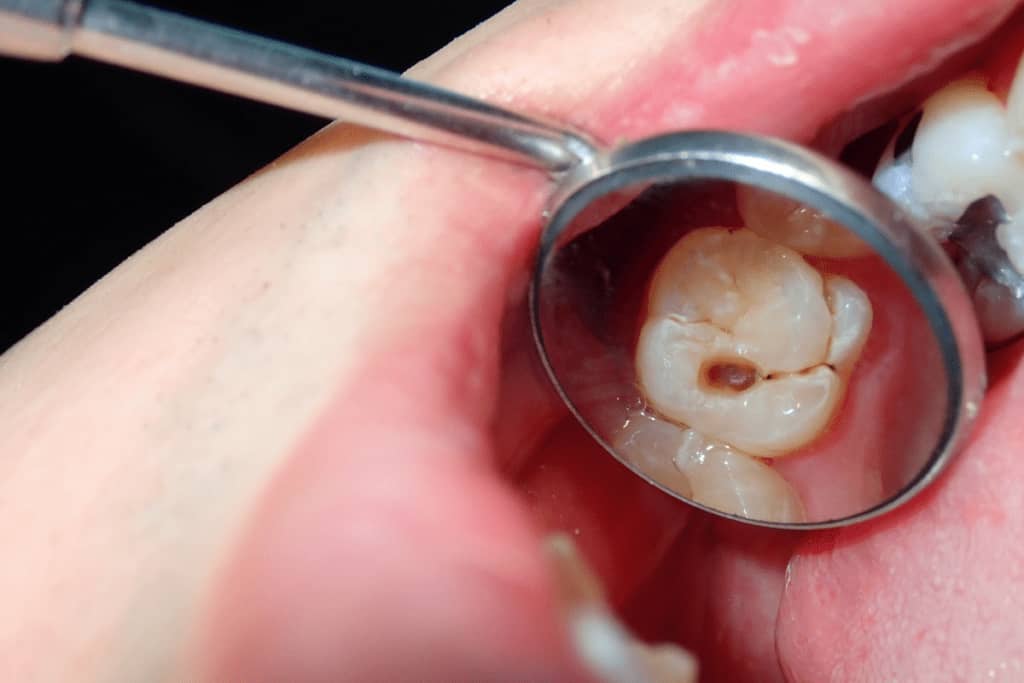
Dentists apply the low-cost liquid directly to a cavity using a small sponge-tipped applicator. The process takes only a few seconds per tooth, and unlike a traditional filling, it does not require the dentist to remove the decayed tooth material.

Instead, the treatment works by arresting the decay and preventing it from progressing.
Stronger Evidence for a Long-Used Treatment
SDF has been used successfully in many countries for decades. In the United States, dentists have used it off-label since 2014, when it was cleared as a medical device for reducing tooth sensitivity.
Until now, however, researchers had not completed the large U.S. clinical trials needed to establish strong evidence of its safety and effectiveness for treating tooth decay. Such evidence could support an application to the Food and Drug Administration for approval of SDF as a dental caries treatment.
A Phase III clinical trial led by the University of Michigan has now provided that evidence.
Published in JAMA Pediatrics, the study involved 830 children younger than 6. Participants were recruited through dental offices, pediatric medical practices, Head Start and Early Head Start programs in Michigan, New York and Iowa.
SDF Stopped Decay in Many Baby Teeth
Researchers found that applying 38% SDF every six months stopped decay in more than half of the affected baby teeth in 38% of the treated cases.
Traditional cavity treatment generally involves removing damaged tooth material and placing a filling. SDF takes a different approach: the liquid is painted directly onto the cavity without removing the decayed portion.
“This is a very effective and safe treatment even in children as young as 1,” said Margherita Fontana, a professor at the University of Michigan School of Dentistry and the study’s lead investigator.
Tooth decay is the most common chronic disease among children and affects more than 40% of children in America. Untreated cavities can cause severe pain and infection and can interfere with sleep, eating and school attendance. They can also lead to repeated medical and dental visits.

An Option for Patients Who Struggle With Traditional Treatment
SDF could be especially useful for very young children, older adults, people with developmental or physical disabilities, and patients with severe dental anxiety. It may also benefit people who have limited access to conventional dental care or who cannot easily tolerate standard dental procedures.
The treatment does have one significant cosmetic disadvantage: the silver permanently darkens the decayed portion of the tooth.
Fontana said broader use of SDF requires high-quality evidence demonstrating both its safety and effectiveness. Such evidence could help expand treatment beyond dental offices and into medical settings.
The study began in 2018 and continued despite disruptions caused by the COVID-19 pandemic.
“Clinicians want high-quality evidence before changing practice,” Fontana said. She noted that young children often see pediatricians years before they visit a dentist, meaning wider acceptance of SDF could allow cavities to be treated earlier, before they become painful, infected or severe enough to require surgery.
Discovery likely to Support FDA Approval
Fontana collaborated with researchers from New York University, the University of Iowa and Indiana University, along with the National Institute of Dental and Craniofacial Research. The NIH institute provided more than $12 million to support the study.
The trial produced clinical data that the manufacturer can use in seeking FDA approval for SDF as a treatment for dental caries. Elevate Oral Care supplied Advantage Arrest 38% SDF, the product evaluated in the trial.
Amr Moursi, a professor of pediatric dentistry at New York University College of Dentistry and a co-principal investigator, said the results could help expand access to the treatment.
The researchers said FDA approval could move SDF beyond its current off-label status, potentially encouraging wider use by healthcare providers, improving insurance coverage and promoting more consistent product quality.
A Temporary Solution, or a Long-Term One
For some children, repeated SDF applications every few months could control a cavity until a baby tooth naturally falls out. For adults, the treatment could serve as a longer-term option or provide temporary protection until conventional restorative treatment becomes practical or affordable.
“For almost anyone, this can arrest the decay and stop the infection and the pain it causes,” Fontana said. “This could benefit many people.”



 English