

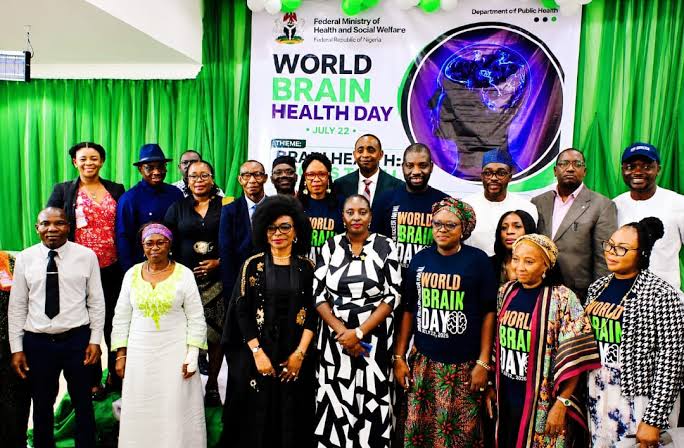
For the first time, brain health is taking a central place in Nigeria’s public health planning as the Federal Government begins work on a national strategy aimed at improving care for millions of people living with neurological conditions.
The announcement came during activities marking World Brain Day 2026 in Abuja, where government officials, medical experts and advocacy groups called for stronger investment in services that address diseases affecting the brain and nervous system. The initiative is expected to shape future policies on prevention, diagnosis, treatment and rehabilitation for neurological disorders across the country.

As part of the new direction, the Federal Ministry of Health and Social Welfare will create a dedicated Brain Health Desk within its National Mental Health Programme. The unit will coordinate national efforts on research, public awareness, workforce development and partnerships while ensuring brain health receives greater attention in healthcare planning.
Health experts have long argued that neurological disorders receive less attention than many other non-communicable diseases despite their growing impact. Conditions such as stroke, epilepsy, dementia, Parkinson’s disease and traumatic brain injuries continue to place a significant burden on patients, families and the healthcare system, particularly where specialist services remain limited.
Officials said the new agenda is expected to encourage earlier detection of neurological illnesses, improve access to quality care and strengthen rehabilitation services for people living with long-term brain disorders. Greater collaboration among researchers, healthcare institutions and development partners is also expected to support innovation and evidence-based policymaking.
Speaking at the event, government representatives stressed that brain health should not be viewed as a luxury but as an essential part of achieving better health outcomes for all Nigerians. They noted that access to neurological care should be available regardless of age, gender, income level or geographical location.
Medical professionals also encouraged Nigerians to protect their brain health through practical lifestyle measures, including controlling blood pressure and diabetes, engaging in regular physical activity, eating nutritious meals, avoiding tobacco use, limiting excessive alcohol intake and seeking prompt medical attention when symptoms such as sudden weakness, seizures or persistent memory problems occur.
The government also pledged to observe World Brain Day annually, a move stakeholders believe will keep public attention focused on neurological health while encouraging sustained investment in specialist care and community awareness programmes.



 English