

By Evans Matthews
The pharmaceutical world is undergoing a seismic shift. Artificial Intelligence (AI), once a futuristic concept, is now at the forefront of drug discovery – an arena traditionally dominated by human scientists working painstakingly through years of trial and error. The question now echoes across laboratories and boardrooms worldwide: Can AI truly replace scientists in drug discovery?
AI’s growing influence is undeniable. Machine learning algorithms can analyze vast datasets in minutes, identifying potential drug candidates far faster than traditional methods. Tasks that once took years such as screening millions of chemical compounds, can now be completed in days. This acceleration is not just about speed; it’s about possibility. AI opens doors to discovering treatments for diseases that have long eluded researchers.
“AI doesn’t get tired, and it doesn’t overlook patterns hidden in complex data,” says Dr. Lila Banerjee, a computational biologist based in London. “It allows us to explore chemical spaces that humans simply cannot process efficiently.”
Globally, pharmaceutical giants and startups alike are investing heavily in AI-driven platforms. From North America to Europe, and increasingly in Asia and Africa, AI is being used to predict how drugs will interact with the human body, optimize clinical trial designs, and even repurpose existing medications for new therapeutic uses. In regions with limited research infrastructure, AI offers a chance to leapfrog traditional barriers and participate more actively in global drug development.
However, the idea of AI replacing scientists entirely is far more complex and contentious.
Drug discovery is not just a computational challenge; it is a deeply human endeavor that involves intuition, creativity, and ethical judgment. Scientists do more than analyze data – they ask questions, interpret ambiguous results, and make critical decisions that shape the direction of research. AI, for all its capabilities operates within the boundaries of the data it is given.

“AI is a powerful tool, but it lacks context,” explains Professor Daniel Okoye, a pharmacologist in Lagos. “It cannot fully understand the social, biological, and ethical nuances that influence drug development. That’s where human expertise remains irreplaceable.”
There are also concerns about data quality and bias. AI systems are only as good as the data they are trained on. In a global context, where medical data from low-and-middle-income countries is often underrepresented, there is a risk that AI-driven discoveries may not be universally effective. This raises critical questions about equity and access in the next generation of medicines.
Moreover, regulatory frameworks around the world are still catching up with the rapid pace of AI innovation. Ensuring that AI-developed drugs are safe, effective, and ethically produced requires rigorous oversight – something that cannot be automated away.
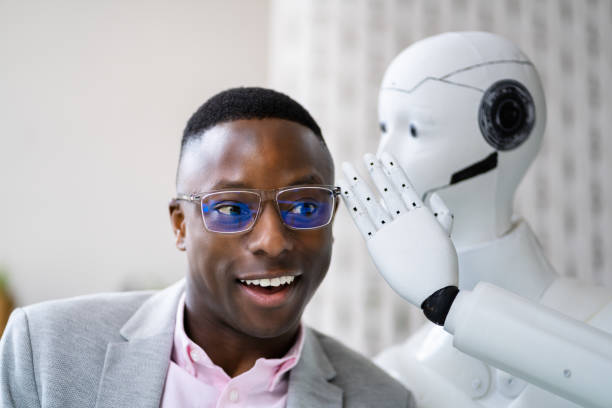
Rather than replacement, many experts see a future defined by collaboration. AI can handle the heavy computational lifting, freeing scientists to focus on strategic thinking, hypothesis generation, and patient-centered considerations. This synergy could redefine the drug discovery process, making it faster, more efficient, and more inclusive.
“Think of AI as a co-pilot, not a replacement,” says Dr. Banerjee. “The best outcomes happen when human intelligence and artificial intelligence work together.”
As the global healthcare landscape continues to evolve, one thing is clear: AI is not here to replace scientists, but to transform how they work. In this partnership lies the true promise of innovation – one where technology amplifies human ingenuity to deliver better, faster, and more equitable healthcare solutions for the world.



 English