

By Morgan Nwanguma
Scientists have identified a previously unknown link between malfunctioning mitochondria, cellular metabolism and the chronic inflammation associated with ageing. In experiments involving mice, blocking one part of this pathway reduced inflammation and improved measures of healthy ageing.
The study led by researchers from Sanford Burnham Prebys Medical Discovery Institute, Mayo Clinic and collaborating institutions and published in Nature, focuses on senescent cells, often called “zombie cells.” These cells stop dividing but remain metabolically active and can release inflammatory molecules for prolonged periods.
This inflammatory activity, known as the senescence-associated secretory phenotype (SASP), has been linked to chronic inflammation and several age-related diseases.
Mitochondria play a key role
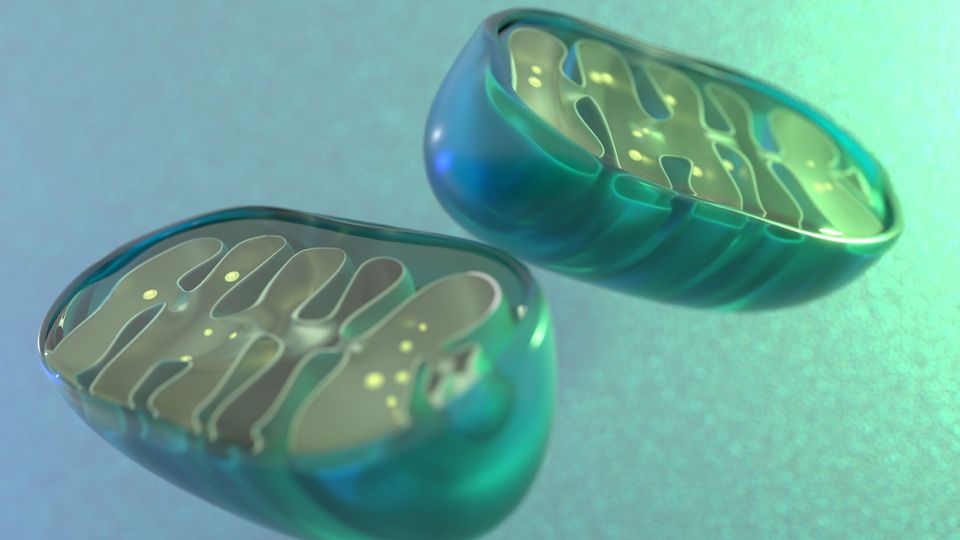
The researchers found that mitochondria in senescent cells produce increased amounts of acetyl-CoA, a molecule involved in cellular metabolism. Acetyl-CoA can modify histones, proteins that package DNA, making sections of DNA more accessible.
Among the regions that become more accessible are genes involved in the SASP inflammatory response.

But increased acetyl-CoA alone was not sufficient to fully activate these genes.
The researchers discovered that a second mitochondrial process was involved. Damaged mitochondria can release DNA and RNA into parts of the cell where they do not normally belong. The immune system interprets this misplaced genetic material as a danger signal, activating inflammatory pathways.
The two processes therefore work together: acetyl-CoA makes inflammatory genes more accessible, while mitochondrial DNA and RNA leakage provides the signal that activates them.
Blocking the pathway reduced inflammation
The researchers then tested CTPI-2, a drug that blocks a transport protein involved in the production of acetyl-CoA.
In mice, treatment with CTPI-2 reduced inflammation across several tissues and was associated with improved tissue function and measures of healthspan during ageing.
Notably, the treatment did not eliminate the immune signals generated by leaking mitochondrial DNA and RNA. Instead, it weakened the metabolic component of the pathway, making SASP-related genes less accessible and reducing their inflammatory activity.
According to the researchers, the findings point toward a potential therapeutic strategy that targets metabolic signals controlling access to inflammatory genes, rather than directly suppressing the immune system.
However, the results are currently preclinical: the reported benefits were demonstrated in mice, and further research is needed to determine whether the approach is safe and effective in humans.
The study’s first author was Hélène Martini, PharmD, PhD, a postdoctoral researcher in the Passos laboratory at Mayo Clinic.
Other authors comprise:
- Aaron Havas, Rabi Murad, Xue Lei and Rebecca A. Porritt at Sanford Burnham Prebys
- Anthony B. Lagnado, Nicholas Pirius, Ana Catarina Franco, Gung Lee, Yeaeun Han, Jennifer L. Rowsey, Stella Victorelli, Wazim Mohammed Ismail, Amelia Mazzone, Tianna M. Espe, Taro Hitosugi, Ya Li, Alexander M. Washington, Jair Machado Espindola-Netto, Dominik Saul, Sundeep Khosla, Diana Jurk, Enis Kostallari and Alexandre Gaspar-Maia at Mayo Clinic
- Jodie Birch at Imperial College London
- Francisco D. M. Marques at Albert Einstein College of Medicine
- Oliver D. K. Maddocks at the University of Glasgow
The research was backed by the American National Institutes of Health, National Institute on Ageing, National Cancer Institute, National Institute of Diabetes and Digestive and Kidney Diseases, Department of Defense Ovarian Cancer Research Programme, Hevolution Foundation, The Glenn Foundation for Medical Research, Cancer Research UK, and Robert and Arlene Kogod Centre on Ageing.



 English