

By Deborah Bamisaye
Last time, we walked into an imaginary old building.
The lights were flickering.
The corridors were becoming quiet and we asked a frightening question: What happens when the brain begins to lose some of its memories? Then came the twist. The brain is not a completely helpless structure; it can adapt. It can change its connections. And our physical activity can influence the biological environment in which the brain operates.
We met three fascinating forms of movement:
- Resistance training.
- Dual-task exercise.
- Lower-body exercise.
But there’s a catch. They don’t all do the same thing. So, let’s take them out of the laboratory and into everyday Nigerian life. Because you don’t need to book a flight to Silicon Valley or even find the fanciest gym in Lagos or anywhere in the country, to get moving. Sometimes, the solution begins right where you are.
Three Moves, Three Different Benefits
Can we discuss this now? Sure?
1. Resistance Training: Don’t Just Lift. Challenge the Muscle.
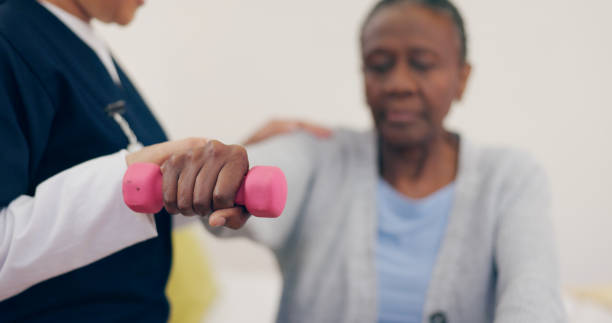
Let’s clear up a common misunderstanding first. Resistance training does not mean you must start lifting heavy weights. For one person, it may mean using resistance bands; for another, it could mean carefully performing body-weight exercises. What about the elderly you may ask? For an older adult, something as simple as repeatedly standing up from a sturdy chair may provide a useful strength challenge, depending on their ability. The point is resistance. Your muscles meet a challenge and your body responds.
Resistance exercise can improve muscular strength and physical function, and exercise in general is associated with a range of benefits relevant to healthy ageing. Remember BDNF from Part 1? (Oh that? You can check last month’s pharmaTimes, you’ll find what BDNF is. It will also help you to understand this second part better.) That brain-supporting protein is one of the biological pathways scientists are investigating in relation to exercise and brain function.

Try this Idea
If appropriate for your health and fitness level, simple movements such as:
- Sit-to-stands from a sturdy chair
- Wall push-ups
- Resistance-band exercises
- Carefully performed body-weight exercises can introduce resistance into your routine.
The benefit to think about here is strength and physical function. Stronger muscles can make everyday activities easier and staying physically capable helps you remain active. But don’t imagine a bell to travel through your bloodstream carrying a parcel marked: “special delivery for the brain.” Biology doesn’t work quite that neatly. Exercise triggers a complicated network of responses involving muscles, blood vessels, metabolism, hormones and the nervous system and the brain is part of that conversation. You should get results as you do any of them daily. That brings us to our next movement.
2. Dual-Task Exercise: When the Body Moves, But the Brain has Homework
This one is fun. Imagine walking while counting backwards. Or stepping from side to side while naming fruits or walking along a safe route while remembering a short sequence of numbers. Now the brain can’t simply sit back and watch.
It has work to do: Move. Think. Move. Think. That is the idea behind dual-task activity: combining physical movement with a cognitive demand. And there is a very Nigerian way to think about this. Imagine an older woman walking around her compound while naming Nigerian states. Ogun, Oyo, Osun, Lagos, Kwara, etc. Then she changes the task. “Now, she names five fruits.” Mango, Orange, Pawpaw and so on. The exercise is no longer just about the legs. The person is moving and processing information. That’s the distinct attraction of dual-task exercise. It challenges attention, coordination and cognitive processing while the body is moving and that matters because everyday life is full of these combinations.
Walking while talking (you don’t have to call yourself a ‘walkie-talkie,’ do you?) That was on a lighter note though. Let’s continue: Carrying something while watching your path. Moving through a busy environment while paying attention to what is around you. The brain is constantly coordinating body and environment. Dual-task exercises simply make that challenge more deliberate. You would start doing that! Won’t you?

3. Lower-Body Exercise: Your Legs are Carrying More than Your Body
Now let’s talk about the part of the body many people underestimate. ‘The legs.’ Strong legs aren’t just about climbing stairs without stopping; they are about independence. Think about an older person who wants to:
- Go to church
- Visit a neighbour
- Walk around the compound
- Go to the market
- Get into a vehicle
- Stand up from a chair
- Move from one room to another
These ordinary activities depend heavily on lower-body strength and balance. When those abilities decline, life can become smaller and when movement becomes harder, people may move less. That can become a vicious cycle:
Less movement → less physical capacity. Lower-body strengthening can help maintain the physical abilities needed for mobility and everyday function. That’s why exercises such as sit-to-stands and appropriate step-ups can be useful additions to a programme for someone who can perform them safely and there is a Nigerian connection worth mentioning here.
Researchers Caleb Ademola, Omuwa Gbiri and Biliafeez Francisca Amusa studied a structured exercise programme involving people living with dementia in Nigeria. Their 2020 study found improvements in cognition, physical functioning and participation in everyday life following progressive, task-oriented circuit training.
Think about that for a moment. This was not simply a discussion about exercise in a foreign laboratory. The research involved people receiving care in Nigeria.
The findings do not prove that dual-task exercise cures Alzheimer’s disease. However, they offer an encouraging example of how carefully designed physical activities may contribute to the rehabilitation and everyday functioning of people living with dementia.
The third exercise, you say? Yes…the third…” I think I’ll save that discussion for the next episode. I truly appreciate you for stopping by. Till I see you next time: keep moving, keep learning, and keep giving your brain something to work with. Bye!


 English