

By Deborah Bamisaye
Come oh, who holds a meeting in the middle of the night? You mean…those…WHAT!!!
The Midnight Meeting Inside the Gut
‘Fibers: Make way, everyone! Your favourite guests have arrived!
Gut Bacterium: Oh, there you are! We’ve been expecting you. What took you so long?! The last time you showed up, half the neighbourhood had a party!
Fibers: And you enjoyed every minute of it! We’ve had quite a journey, you know. The stomach got things moving, the small intestine had its turn with the food, and now here we are in the large intestine, with some of us still intact!
Gut Bacterium: Splendid! Send the others in. We have work to do!
Fibers: We’ll do that, but before then, have you forgotten what happened the last time we passed through here?
Gut Bacterium: Forgotten ke? My dear, some of us are still talking about it! You bring quite a lot to the table, even after the body’s digestive machinery has had its say.
Fibers: Then you know there’s more to us than the journey we’ve made!
Gut Bacterium: And especially in this neighbourhood, things can get rather interesting! What the body cannot fully digest can become quite a feast for some of us. And when we get to work, we produce substances that make this place even more fascinating!’
Now, before you dismiss this as a conversation between imaginary characters, let us uncover the fascinating science behind it.
Meet the Residents of Your Gut
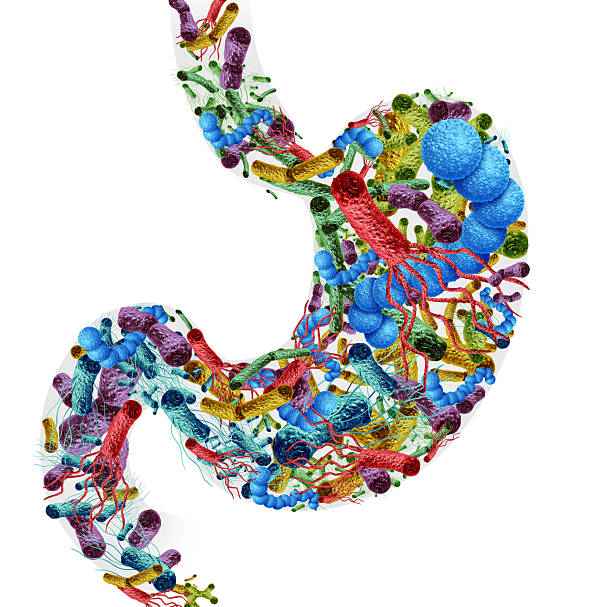
Your digestive tract is home to a vast community of microorganisms, including bacteria, viruses, fungi and other microscopic life forms. I guess you know that enough since this series started. Scientists call the community of microorganisms living in a particular environment its ‘microbiota’. The term ‘microbiome’ is often used to describe this community alongside its genetic material and surrounding environment.
For simplicity, think of the gut microbiota as the residents and the gut microbiome as the residents plus (+) the biological world they create and inhabit.
Now, here is the first surprise.
Not all bacteria are enemies!
We have spent so much time hearing about bacteria that cause infections, that we may forget something important: certain bacteria perform useful functions in the body.
Some gut microbes help break down parts of food that our own digestive enzymes cannot fully digest. Others produce substances that help support the intestinal lining. Some also interact with our immune system.
But please, do not appoint every bacterium as a hero just yet! Not so fast.
The effects depend on the microorganism, its activities, the environment in which it lives and the condition of the person hosting it.
In other words, ‘Having microbes is normal; what matters is the relationship between those microbes and their host.’

The Food You Eat May Be Feeding More Than You!
Let’s follow a meal of beans on its journey through the digestive system. You eat the beans. Your digestive system gets to work, breaking down food and absorbing nutrients. But not every component of that meal is completely digested in the small intestine.
Some dietary fibers continue into the large intestine, where certain gut microbes can use them. Yes! Your gut microbes may be enjoying part of your meal too and this is where the story gets exciting.
When certain microbes ferment particular types of dietary fibre, they produce substances called ‘short-chain fatty acids’.
Three important examples are acetate, propionate and butyrate. Those names may sound like something from a chemistry examination, but stay with me.
These substances are not merely scientific vocabulary. They are among the compounds involved in communication between gut microbes and the human body. Butyrate, for example, serves as an important energy source for many cells lining the colon. Short-chain fatty acids also participate in processes involved in intestinal function and immune regulation.
So, when we talk about fiber, we are not simply talking about helping food move through the digestive tract. We are also talking about supplying certain gut microbes with material they can use. Now, that is worth thinking about, especially the next time someone pushes vegetables away from the dining table!
But What Exactly Is Prebiotic Fiber?
Here comes another word that often appears in conversations about gut health: prebiotics. Are prebiotics the same as probiotics? No!
Think of them as two different things:
- ‘Probiotics’ are live microorganisms that provide a demonstrated health benefit when administered in adequate amounts.
- ‘Prebiotics’ are substances used by beneficial microorganisms in the body in a way that produces a health benefit. Some prebiotics are specific types of dietary fiber.
In everyday language, certain prebiotic fibers can act like food for particular microbes in your gut. Foods containing fibers that gut microbes can use include beans, peas, lentils, onions, garlic, oats and some other whole grains, as well as certain fruits and vegetables.
However, not every fiber is a prebiotic, and not every food containing fiber has the same effect on every person’s gut.
The details matter and that brings us to a question worth asking: if our gut microbes can use certain parts of our food, what happens when we consistently eat a diet with very little fiber?

When the Microbes Don’t Get Enough of What They Need
Let us be clear: your gut is not going to collapse because you miss a serving of vegetables one afternoon. The human body is more complicated than that.
But dietary patterns over time can influence the gut microbial community. A diet that regularly supplies a variety of fiber-rich plant foods provides different substrates for different microbes. A diet consistently low in these foods may provide less of the material needed by microbes that ferment certain fibers.
That does not mean every person eating a low-fiber diet will develop the same problem. Gut health depends on several interacting factors, including overall diet, medication use, age, health conditions and individual differences in the microbiome.
Still, the broader lesson is important: ‘What you eat can influence not only your own nutrition but also the activities of some of the microorganisms living in your gut.’ And those microbial activities can, in turn, influence aspects of your intestinal environment.
I kid you not, ‘It is a relationship worth taking seriously.’ Did you just say, ‘Sure’? That’s great. Let’s discuss more on this next time. See you soon!
 English