
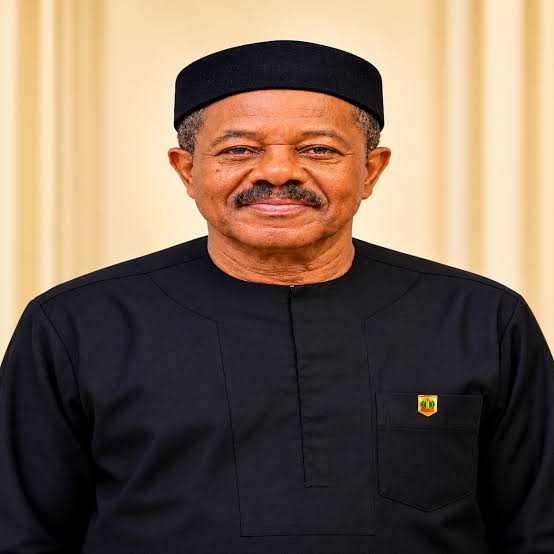
The election of Dr. Ifeanyi Eric Okoye as the 12th President of the Manufacturers Association of Nigeria could not have come at a more critical time for the nation’s industrial sector.
At its 54th Annual General Meeting in Lagos, MAN made a defining statement by choosing not just a manufacturer, but a home-grown industrialist who has built Juhel Nigeria Limited from scratch since 1987 into a pharmaceutical powerhouse. His emergence, succeeding Otunba Francis Meshioye, places a tested entrepreneur, not a rent-seeker, at the helm of an association fighting for its survival. It is a choice of substance over sentiment.
Dr. Okoye is no stranger to the headwinds facing Nigerian manufacturing. As a pharmacist, industrialist, Fellow of the Pharmaceutical Society of Nigeria, former member of the governing council of the Standards Organization of Nigeria, and alumnus of Harvard Business School and the National Institute for Policy and Strategic Studies, he understands both the factory floor and the policy boardroom. That dual perspective is exactly what MAN needs.
The task before him is enormous and four-fold. First is the crisis of competitiveness that has made Made-in-Nigeria goods expensive at home and uncompetitive abroad. Manufacturers grapple with epileptic power supply that forces them to spend up to 40 percent of production cost on diesel for self-generation. They face multiple taxation from federal, state and local governments, forex scarcity for raw materials and machinery, interest rates above 30 percent, and crumbling transport infrastructure where moving goods from Lagos to Kano costs more than importing from China to Lagos. The result is a sector whose contribution to GDP hovers around 9-10 percent, while the country leaves an estimated N40 trillion manufacturing opportunity untapped.
Dr. Okoye must lead a more aggressive, data-driven advocacy to dismantle these barriers. What is needed now is relentless engagement with the Presidency, the Ministry of Industry, Trade and Investment, and the National Assembly to convert complaints into reforms. This is important.

Synergy in the pharma sector has transformed manufacturing in India and Bangladesh. In India, the Indian Drug Manufacturers Association (IDMA) working with the Ministry of Chemicals and CDSCO regulator, co-created the PLI scheme and Jan Aushadhi policy. Government gave incentives, protected local API parks, and fast-tracked WHO-GMP certification. The result is that India grew from an importer to the pharmacy of the world, supplying 60% of global vaccines and 20% of generics.
In Bangladesh, the Bangladesh Association of Pharmaceutical Industries with DGDA and the Ministry of Health leveraged LDC patent waiver and Drug Control Ordinance to block finished imports and support local factories. In Africa, South Africa’s PMG and Ghana’s PMAG with SAHPRA and FDA Ghana worked with government for 15% local procurement preference, and tax waivers on raw materials. This built Aspen Pharmacare and local giants like Danadams and Ernest Chemists into WHO-prequalified producers.
Second, he must push for deliberate and consistent industrial policy. Nigeria cannot industrialize by slogans. The era of policy flip-flops that nearly crippled manufacturing must end. He must demand faithful implementation of the backward integration policy, the Executive Order on patronage of Made-in-Nigeria goods, and the Export Expansion Grant. His background is instructive. Having built Juhel into a WHO-compliant pharmaceutical giant when over 70 percent of drugs consumed in Nigeria were imported, he knows the power of local content policy.
Third is the challenge and opportunity of the African Continental Free Trade Area. AfCFTA is both the biggest market opportunity in 60 years – 1.4 billion people and $3.4 trillion GDP – and an existential threat if Nigerian factories cannot compete. Without competitiveness, Nigeria will become a dumping ground. MAN under Okoye must work with SON, NAFDAC, and the AfCFTA National Action Committee to ensure Nigerian products meet continental standards while protecting local industry from dumping.
Finally, he must heal and unite the association. MAN must speak with one credible voice. Dr. Okoye comes with goodwill, private sector credibility, and the national honour of Officer of the Order of the Federal Republic. What manufacturers need now is results measured in lower energy costs, access to single-digit finance through the Bank of Industry, and concrete patronage.
He has two-year tenure to make a mark. If he can translate his 38-year success at Juhel into a broader renaissance for manufacturing, his tenure will be remembered not just as historic, but as transformational. The task is daunting. The time to start is now.



 English