

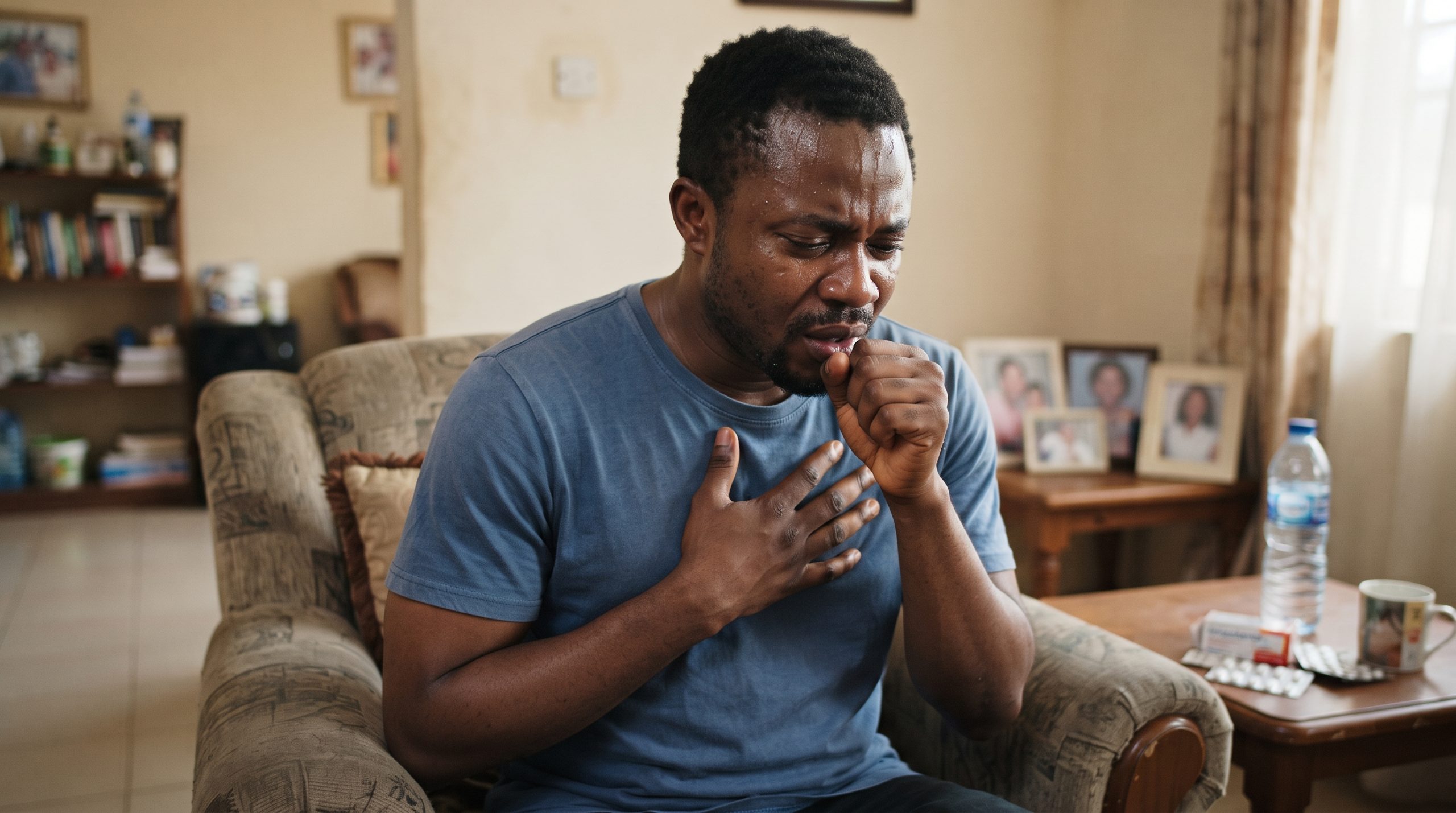
Pneumonia is an infection of the lungs that can affect people of all ages. It may be caused by bacteria, viruses or, less commonly, fungi and parasites. While some cases are mild, pneumonia can become serious when it affects breathing.
What are the symptoms?
The symptoms can vary depending on the cause and severity of the infection. Common signs include:

- Cough, which may sometimes produce mucus
- Fever, chills or sweating
- Shortness of breath or difficulty breathing
- Chest pain, especially when breathing deeply or coughing
- Unusual tiredness or weakness
- Nausea, vomiting or diarrhoea
Older adults may also experience confusion or changes in mental alertness.
In children, pneumonia may show as coughing or difficulty breathing, with fast breathing being an important warning sign. A child’s chest may also pull inward below the ribs when breathing. Babies and young children who are unable to feed or drink, become unusually sleepy or have difficulty breathing require prompt medical attention.
Pneumonia can sometimes develop after another respiratory infection, so symptoms that initially seem like a common cold or flu should not be ignored if they become severe or worsen.
Seek urgent medical care if there is severe difficulty breathing, persistent chest pain, confusion, bluish lips or face, or a significant worsening of symptoms.
Early medical assessment can help determine the cause and appropriate treatment. Bacterial pneumonia may require antibiotics, but antibiotics should only be used when prescribed by a qualified healthcare professional.



 English