

By Deborah Bamisaye
When the City Falls Out Of Balance
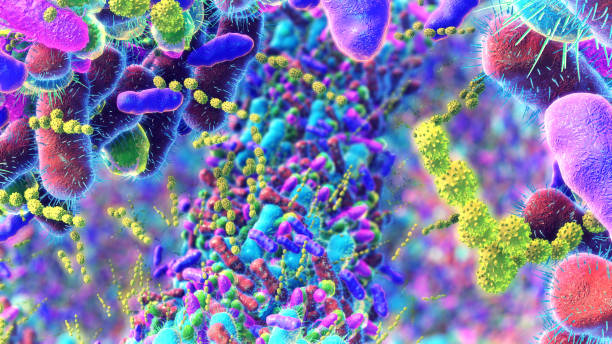
Remember the city we discovered last month – the one with no airport, no governor, no street names and no postal code? Yet, somehow, you have carried it with you since the day you were born. Today, I want us to return to that city but this time, something has changed. The city is no longer perfectly quiet. Some workers are exhausted, some are missing, and others are multiplying. And when a city loses its balance, trouble does not always arrive with sirens. Sometimes, it begins quietly.
When the Workers Stop Working Together
The trillions of microorganisms living in your gut are not all the same. Some are beneficial. Some can be harmful under certain conditions. Many simply live as part of a complex ecosystem. The goal is not to have a gut completely free of bacteria. That would be impossible. The goal is balance.
Scientists use the term gut microbiome to describe this complex community and its genetic material. Researchers continue to uncover how this community interacts with digestion, immunity and other aspects of human health. And here is where the story becomes interesting: ‘The community can be influenced by what we eat, our lifestyle, medications and many other factors.’
In simple terms: What happens in the city can change the city.
Who Is On Your Gut’s Menu?

Let us start with food. Every meal is not just about filling your stomach. It is also about the environment you create for the microorganisms living inside you. The World Health Organization (WHO) recommends a varied diet built around foods such as fruits, vegetables, legumes and whole grains, while limiting foods high in free sugars, unhealthy fats and excessive salt. And this is where our Nigerian kitchens have something interesting to offer.
Folasade Akinwumi, a food scientist and gut-health advocate, has highlighted the potential value of traditional Nigerian foods, including fermented foods and fibre-rich staples, in supporting a healthier gut environment. Think about it.
Beans. Vegetables. Fruits. Whole grains. Unripe plantain. Traditional fermented foods.
These are not exotic discoveries from a distant laboratory. Many have been sitting in our kitchens all along.
But There is another Side to the Story
Sometimes, we do not only feed the good residents. Our everyday habits can influence the entire environment.
Too much highly processed food, too little fibre, poor sleep, inactivity, Chronic stress, and careless use of medicines can all become part of the bigger picture. That does not mean that every stomach problem is caused by an unhealthy microbiome. And it certainly does not mean that every illness can be cured by changing your diet.
Please don’t let anyone sell you that story. Gut health is important but it is not magic. Some digestive symptoms require proper medical assessment, diagnosis and treatment.
The Antibiotic Question
There is another issue we must not ignore: Antibiotics can be lifesaving medicines but they should not be taken casually or simply because someone thinks an illness “might be an infection.”
WHO recommends using antibiotics only when medically indicated and as prescribed. Why? Because responsible antibiotic use helps protect their effectiveness and reduces the growing problem of antimicrobial resistance.
And remember our city? When antibiotics are necessary, they may affect the community of microorganisms living in the gut too. That is one more reason not to treat antibiotics like ordinary painkillers that can be taken whenever we feel unwell.

So, What Does The CEO Want?
Not perfection.
Not expensive supplements.
Not mysterious “detoxes.”
Not a cupboard full of miracle products.
The gut needs something much less glamorous: ‘Consistency.’
Eat a varied diet.
Make room for fibre-rich foods.
Include fruits and vegetables.
Choose whole or minimally processed foods more often.
Get adequate sleep.
Keep your body moving.
Use antibiotics responsibly and only when medically advised.
And when your body repeatedly sends unusual signals, don’t simply silence them –
listen; seek proper medical advice.
The Final Board Meeting
We started this journey with a strange idea: Your gut is a silent CEO.
Then we discovered it’s a hidden city.
We met its microscopic residents. We explored its connection with immunity.
We learned that every meal sends a message into that city. And now we know something even more important:
A good CEO cannot run a company alone.
The gut needs our cooperation.
Every plate becomes a decision.
Every habit becomes a message.
Every day becomes another opportunity to support the city we carry within us.
So, the next time you sit down to eat, don’t just ask: “What do I feel like eating?” Ask: “What kind of city am I building inside me?” Because the richest city you will ever own does not need a passport.
You cannot fly to it.
You cannot take a photograph of it.
You cannot visit it on Google Maps.
You carry it everywhere.
And perhaps that is the most astonishing thing we have discovered on this journey:
You have been carrying an entire city within you all along. Now…take good care of your city. Not because it demands perfection but because your body has been depending on it and on you – every single day.
And if there is one thing I hope you remember from this entire journey, let it be this: Good health is rarely built by one dramatic decision.
It is built quietly…
Meal by meal,
Habit by habit,
Day by day.
Until next time – Stay healthy! And keep reading PharmaTimes! Bye!


 English