
By Deborah Bamisaye
“Give me that medicine. I still have some left from the last time.” “Are you sure that is what you need now?”
“It worked before. This is the same problem.” The conversation sounds harmless. It isn’t.
The Prescription That Outlived the Patient
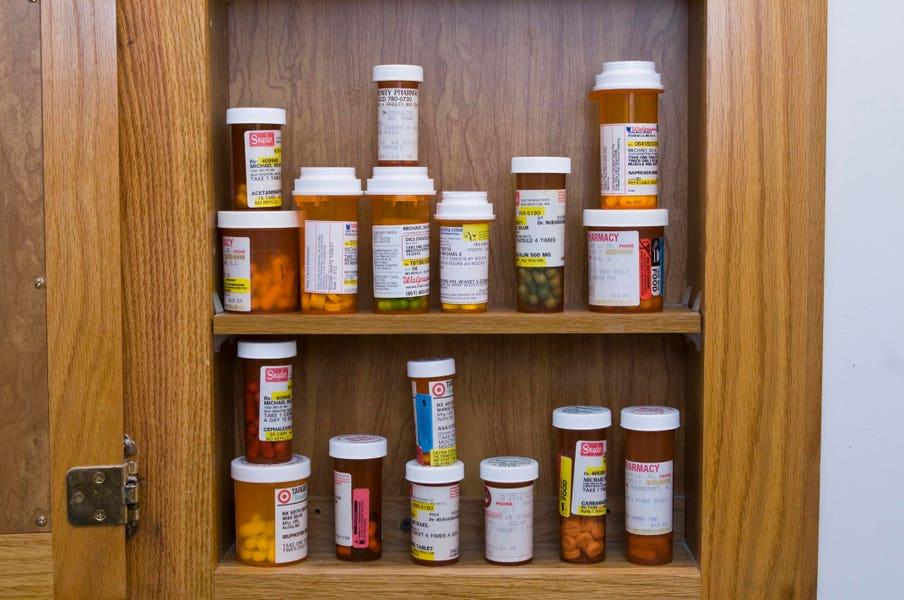
There is a medicine in the house.
It is genuine.
It is properly stored.
Its expiry date has not arrived.
Everything seems perfectly fine.
Except for one small detail:
It was prescribed for yesterday’s problem.
And yesterday is not today.
When a Good Medicine Becomes the Wrong Medicine
This is where many medicine cabinets become surprisingly complicated.
A person gets sick.
They visit a doctor.
A medicine is prescribed.
The person gets better.
Some tablets remain.
They are carefully placed in a drawer, cupboard or medicine box. Months later, something similar happens.
The cough returns.
The pain feels familiar.
The stomach begins to hurt again.
The fever comes.
And suddenly someone remembers: “We still have the medicine the doctor gave us last time.” There it is.
Same medicine.
Same person.
Same symptom.
Problem solved.
Or so it seems.

The Trap of “It Worked the Last Time”
One of the most convincing arguments for self-medication is also one of the most dangerous: “But it worked before.”
Of course, it did. It may have been exactly the right medicine for that particular diagnosis, at that particular time, at that particular dose, and for that particular person. But a familiar symptom does not always mean a familiar illness.
A headache can have many causes.
A cough can have many causes.
Stomach pain can have many causes.
Fever can have many causes.
Even when two illnesses produce similar symptoms, they may require completely different approaches.
So, the medicine that helped you yesterday may have nothing to do with what is happening today.
The Prescription Has a Story Too
We often think of a prescription as a piece of paper. But a prescription is actually a decision based on information available at that particular time: the patient’s symptoms, the diagnosis, age, medical history, other medicines being taken, allergies, the appropriate dose, the appropriate duration.
And sometimes, the results of tests change the circumstances and the decision may change too.
That is why an old prescription should not automatically become a new treatment plan. A prescription is not a family heirloom. It is not something to be passed from one illness to another, simply because the medicine is still sitting in the drawer.

Antibiotics Make This Even More Important
A person may have taken an antibiotic for a previous bacterial infection and later decide to use the leftovers when another illness appears. But antibiotics do not treat every infection. They do not treat viruses such as those responsible for most common colds and influenza. And inappropriate antibiotic use contributes to antimicrobial resistance, making infections harder to treat when antibiotics are genuinely needed. WHO warns that inappropriate self-medication and unnecessary antimicrobial use are major medication-safety and public-health concerns. The World Health Organization (WHO) has also specifically warned in its African Region that using old prescriptions to treat a current ailment is a practice that should be avoided. It identifies the use of surplus medicines kept at home and obtaining medicines based on advice from friends or relatives rather than trained professionals as unsafe medication practices. That is remarkably close to what happens in many homes: “This is what they gave me last time.” But “last time” is not a diagnosis.
The Nigerian Reality
This is not merely a foreign concern. NAFDAC has highlighted incorrect self-diagnosis, failure to seek appropriate medical advice, incorrect choice of therapy and failure to recognize drug interactions, contraindications and other risks among the dangers associated with self-medication. So perhaps the question we should ask is no longer: “Is this medicine still good?” Perhaps we should ask: “Is this medicine still right for me?” That is a very different question.
The Medicine May Be Perfectly Good
This is the part many people miss. A medicine can be: genuine, properly stored, unopened, within its expiry date, and still be the wrong medicine for the person, condition or circumstances in front of you. That is why medication safety is not simply about keeping medicines from expiring. It is also about using the right medicine, for the right person, for the right condition, in the right way.
So, What Should Happen to The Old Prescription?
Don’t let yesterday’s diagnosis make today’s decision for you.
Don’t automatically reuse leftover prescription medicines because the symptoms seem familiar.
Don’t share someone else’s prescription.
Don’t assume that a medicine prescribed for one person is automatically suitable for another.
And when you are unsure whether an old medicine is appropriate, ask a qualified healthcare professional before using it.
Sometimes, the safest thing to do with an old prescription is not to refill it; it is to revisit the problem.
Perhaps This Is the Real Meaning Of “When Healing Expires”
A medicine can expire.
A medicine can be damaged by poor storage.
But there is another kind of expiration that is much harder to see – the moment when an old treatment is no longer the right answer to a new problem. The tablet may still be within date, the bottle may still look perfect, the prescription may still have your name on it, but the circumstances have changed.
And sometimes, that is enough to make yesterday’s solution today’s mistake. So, before you reach for a medicine leftover from the last illness, pause and ask one important question: “Was this medicine prescribed for what I am experiencing now?” If the answer is No or you simply don’t know, then, don’t let familiarity make the decision for you; seek appropriate professional advice and let today’s condition receive today’s care because medicine should not merely be available when you need it. It should be appropriate for the need you have. And perhaps that is where we should leave this edition: Don’t let yesterday’s prescription write today’s treatment.
This has been a long exposure that calls everyone to the action table. Thanks for reading. Cheers!

 English