

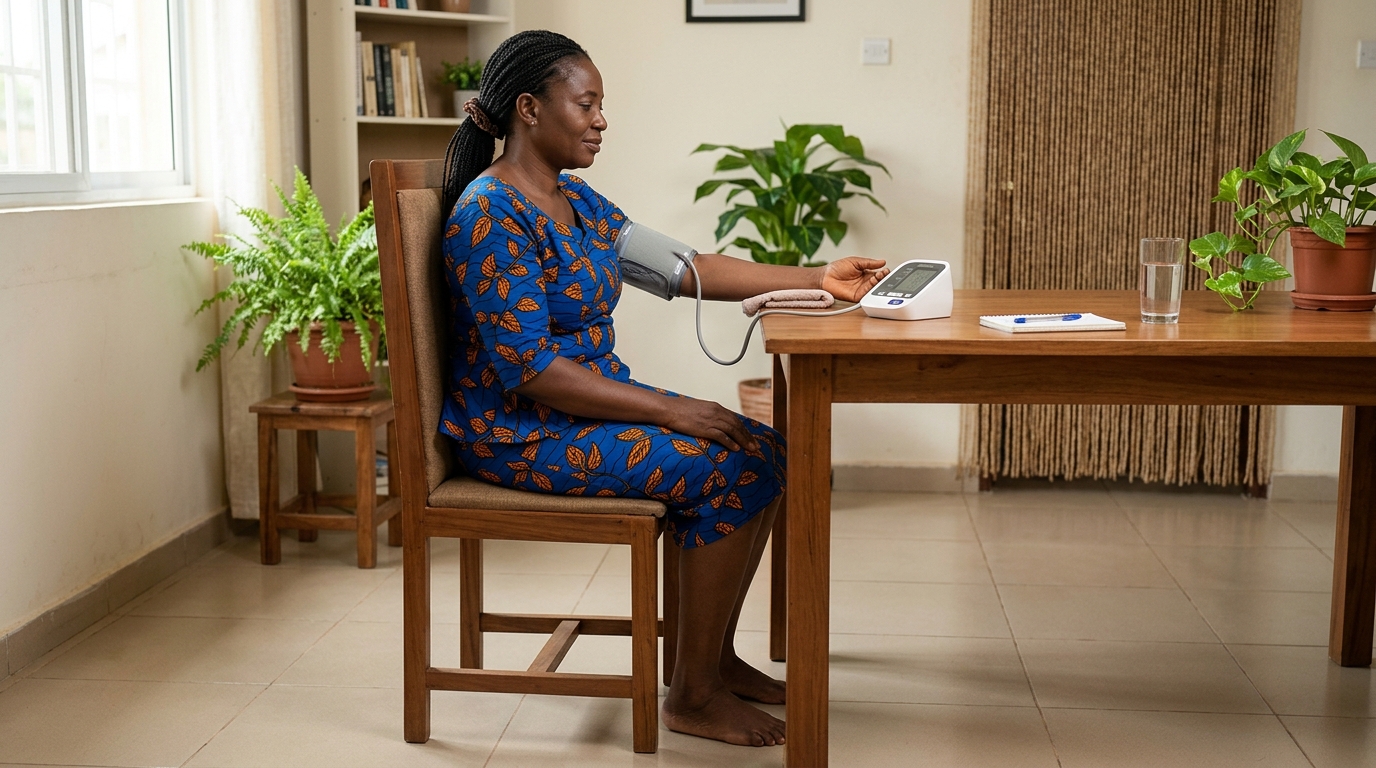
You sit down, wrap the cuff around your arm and press the button. A few seconds later, two numbers appear on the screen.
But how do you know the reading is accurate?
Checking your blood pressure at home may seem as simple as pressing a button, but how you prepare, position your body and place the cuff can affect the result. Here is how to get a more reliable reading.
Choose the Right Blood Pressure Monitor
For home monitoring, an automatic upper-arm blood pressure monitor is generally recommended. Make sure the device is validated for accuracy and that the cuff fits your arm properly. The systolic pressure is the top number. It represents the pressure in your arteries when your heart beats. The diastolic pressure is the bottom number. It represents the pressure when your heart relaxes between beats.
A healthcare professional can also help you confirm that your monitor is working correctly.
Prepare Before Checking
Do not take your reading immediately after exercising or rushing around.
For a more accurate measurement, avoid exercise, smoking and caffeinated drinks for about 30 minutes beforehand. Empty your bladder and sit quietly for at least five minutes before measuring.
During the measurement, stay quiet and avoid using your phone.
Check Both Arms First
If you are checking your blood pressure at home for the first time, measure it in both arms. Blood pressure can differ between the two arms. Knowing this difference is important because, if one arm consistently records a higher reading, a healthcare professional may recommend using that arm for future measurements.

Sit and Position Yourself Correctly
Sit in a chair with your back supported and keep both feet flat on the floor. Do not cross your legs.
Rest your arm on a table so that the middle of the cuff is approximately at heart level.
Place the cuff directly on your bare upper arm, not over clothing.
Make sure it is positioned according to the manufacturer’s instructions.
Keep your arm relaxed and supported throughout the measurement.
Take More Than One Reading
Once the first reading appears, wait about one minute and take a second reading.
Record both readings if you are monitoring your blood pressure regularly. Keeping a record can help you and your healthcare professional identify patterns rather than relying on a single measurement.
What If Your Reading Is High?
One high reading does not automatically mean you have hypertension. Sit quietly and repeat the measurement using the correct technique.
However, if your blood pressure is higher than 180/120 mmHg, wait a few minutes and check it again. If it remains that high, contact a healthcare professional promptly.
If a very high reading occurs with symptoms such as chest pain, difficulty breathing, weakness, numbness, vision changes or difficulty speaking, seek emergency medical care.
Avoid These Common Mistakes
- Measuring immediately after exercise or caffeine
- Talking during the measurement
- Crossing your legs
- Letting your arm hang unsupported
- Placing the cuff over clothing
- Using the wrong cuff size
- Checking only one arm when measuring for the first time
- Relying on one reading alone
Learn more about High Blood Pressure Causes And Symptoms and why regular blood pressure checks matter.



 English