
By Deborah Bamisaye
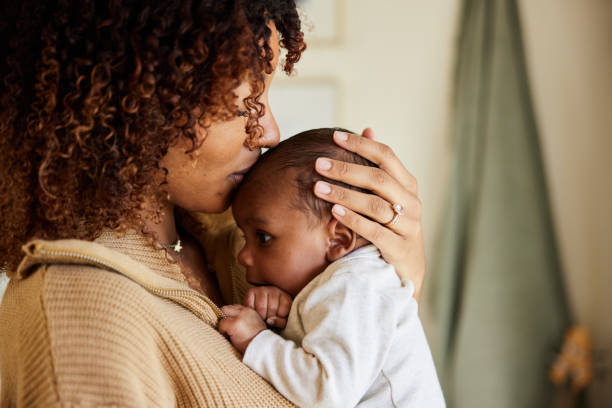
The baby was asleep. The woman stared at his tiny fingers, tiny feet and tiny breaths. She sat quietly beside the crib, watching him.
For months she had prayed for this moment. Years, actually! Tears, treatments; waiting rooms; negative tests; more tears; etc. Now here he was, sleeping peacefully. Yet something unexpected happened; A question slipped into her heart; A question she had never dared to ask before, she looked at her husband. “Do you ever think about it?” He knew exactly what she meant.
“The donor?” he asked” She nodded. (Then silence) Not because they were unhappy. Not because they regretted their decision but because some questions do not disappear the day a child arrives. Those questions simply change shape and for many couples walking the path of donor conception, the emotional journey does not end with a positive pregnancy test.
In some ways… It is just beginning. The Point Is: The greatest challenge is often not choosing a donor. It is making peace with the emotions surrounding the decision. Science may create possibilities but acceptance, healing and love are matters of the heart and perhaps that is why every infertility journey teaches us something profound:
1. Families are built in many ways.
2. Some through biology.
3. Some through adoption.
4. Some through donor-assisted conception.
But all healthy families are sustained by one common thread: A Love that chooses to stay.
Dear Reader,
By now, we have discussed donor sperm, donor eggs, and donor embryos. We have talked about medical reasons, success rates, costs, and treatment pathways but there is another side of the story.
There’s a side that laboratory reports cannot measure – a side hidden behind smiles, baby showers, family photographs, and congratulatory messages; the emotional reality. You see, sometimes the greatest battles are not happening in the womb, they are happening in the heart.
When Joy and Grief Live in the Same Room
One of the strangest emotions many couples experience is this: They are grateful…Yet grieving. Happy…yet hurting; Hopeful…yet afraid: “How can all these emotions exist together? You may ask,” it is because while they are celebrating the possibility of becoming parents, they may also be saying goodbye to a dream they once carried.
The dream of seeing Dad’s nose on a baby: Mum’s way of smiling; Grandma’s eyes; the family resemblance everyone talks about at gatherings, etc. Sometimes donor-assisted conception requires grieving the family story that a couple originally imagined. And that grief is real! However, acknowledging it is not weakness – is healing.

The Question Many Women Whisper
The counselor leaned forward gently. “What worries you most?” The woman stared at the floor, and then finally spoke. “If the baby doesn’t carry my genes…” She swallowed, “…will I still feel like the mother?” The room became quiet, because beneath that question was another. Will I be enough?
The truth is – many women who carry donor-conceived babies experience every kick, every craving, every sleepless night, every contraction, every sacrifice. And somewhere along the journey, many discover something beautiful: Motherhood is not measured only by DNA and it is also measured by devotion.
The Question Many Men Hide
Men often ask fewer questions aloud. However, that does not mean they have fewer fears, sometimes a husband sits quietly during consultations while a storm rages inside him. Questions like: Will I feel connected? Will I truly bond with this child? What happens if the child looks nothing like me? Will people notice? Will I notice? Beneath these questions often lies a deeper fear: Will I still feel like a father?
Yet countless fathers throughout history have discovered that fatherhood grows through bedtime stories, school runs, prayers, guidance, protection, laughter, discipline and love. Not chromosomes!
The Family Factor
Then comes another challenge; Extended family; the aunties; the uncles; the grandparents; the well-meaning relatives who always have opinions. Suddenly new questions emerge: Should we tell them? Should we keep it private? Will they accept the child? What if they don’t understand?
For many couples, these conversations can feel even more intimidating than the treatment itself. Simply because rejection hurts, especially when it comes from people we love.
The Silent Questions Nobody Wants to Say Out Loud
Let’s be honest – some questions visit people late at night. Questions they rarely share with anyone. Questions like:
What if my child someday asks where they came from? What if they wish they knew the donor? What if they feel angry?
What if my spouse and I don’t feel the same way years from now? What if we choose not to proceed? What if parenthood never happens? These questions can be frightening but they are also normal. The presence of questions does not mean the absence of faith – it simply means you are human.
Even, the World Health Organization (WHO) reminds us that infertility is not merely a reproductive condition; it is often an emotional, social and psychological journey as well. And many fertility specialists in Nigeria agree that while science may offer pathways to parenthood, counseling, acceptance and emotional readiness often determine how peacefully those pathways are walked.
So, What Is the Way Out?
Not avoidance; not denial; not pretending the questions do not exist. The way forward begins with honesty. Honesty between husband and wife, honesty with trusted professionals, honesty with your own heart, because decisions made from peace usually endure better than decisions made from pressure; and perhaps one of the most important truths couples eventually learn is this: There are some questions that may never have perfect answers; Yet life still moves forward; Families still grow; Love still flourishes and Hope still survives.
The Point Is:
Infertility sometimes forces couples into conversations they never expected to have. Conversations about genetics; Identity; Family; Faith; Acceptance and Love but after all the tears, fears, consultations, and difficult decisions, many discover something remarkable:
§ A family is not defined only by how a child arrives.
§ A family is defined by who shows up every day to love that child.
§ And perhaps that is why some of the strongest families are not the ones with the easiest journeys…
§ But the ones who chose love, even when the road was uncertain.
Next time, we will tackle one of the most sensitive debates in donor conception: Should children conceived through donor eggs, donor sperm, or donor embryos be told the truth about their origins?
If yes, when? And if no, what are the possible consequences? That conversation may be one of the most important yet.
Till I see you in the next part of this journey. Stay safe!


 English
One thought on “Stripping Infertility of Its Medals (Stories, Struggles, Medical Paths, Strength & Hope – 12)”