

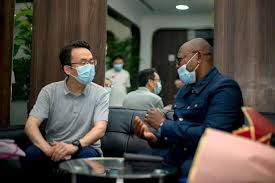
The Democratic Republic of the Congo (DR Congo) has stepped up efforts to contain an ongoing Ebola outbreak following reports from the World Health Organization (WHO) showing a rise in confirmed Ebola cases. As international concern grows, a Chinese medical team has arrived in DR Congo to support local authorities and global health partners responding to the outbreak.
According to the latest WHO update, the Ebola outbreak in DR Congo has recorded 321 confirmed cases and 48 confirmed deaths. Health officials are also investigating 116 suspected cases as surveillance and testing activities continue across affected communities.
The current Ebola outbreak is being caused by the Bundibugyo strain of the Ebola virus, a less common variant for which no licensed vaccine currently exists. The absence of an approved vaccine has heightened the need for rapid case detection, contact tracing, isolation of infected individuals, and strong community engagement to prevent further transmission.
The arrival of the Chinese medical team marks a significant boost to Ebola response efforts in DR Congo. The experts are expected to assist with disease surveillance, laboratory testing, patient care, infection prevention measures, and the training of frontline healthcare workers. Their deployment reflects the growing international support aimed at containing the Ebola outbreak before it spreads further.
WHO and DR Congo health authorities continue to monitor the situation closely as Ebola cases rise. Public health teams are working to identify people who may have been exposed to the virus and ensure they receive timely monitoring and medical attention. Contact tracing remains one of the most effective tools for breaking chains of Ebola transmission.
Ebola virus disease is a severe illness that spreads through direct contact with the bodily fluids of infected individuals or contaminated materials. Early symptoms often include fever, fatigue, headache, muscle pain, and sore throat. As the disease progresses, patients may develop vomiting, diarrhea, impaired organ function, and, in severe cases, bleeding complications.
Health officials in DR Congo are also intensifying public awareness campaigns to encourage early reporting of symptoms and adherence to infection-prevention measures. Community cooperation is considered essential in controlling Ebola outbreaks, particularly in regions where misinformation and limited healthcare access can complicate response efforts.
DR Congo has faced several Ebola outbreaks over the years and has built considerable experience in outbreak management. However, the Bundibugyo strain presents unique challenges due to the lack of an approved vaccine, making traditional public health interventions even more important.
The support provided by the Chinese medical team adds to broader international efforts led by WHO and other partners to contain the Ebola outbreak in DR Congo. Experts say continued surveillance, laboratory support, healthcare worker training, and community engagement will be critical to slowing the rise in Ebola cases and protecting vulnerable populations.
Source: CGTN



 English