


By Deborah Bamisaye
Some family gatherings are not void of arguments and misunderstanding amidst the joy of seeing one another after a long while. And sometimes it could be a case of seeing one another after a long day or weekend. And when there are any health issues, the concerns that pour in can only be left to imagination. Do you have any idea of what I’m talking about? Let me give you an example:
The Dining Table Showdown: Who Declared War on Rice?
In some Nigerian homes, a diagnosis of diabetes does not just change the patient’s diet. It turns the entire family into food inspectors!
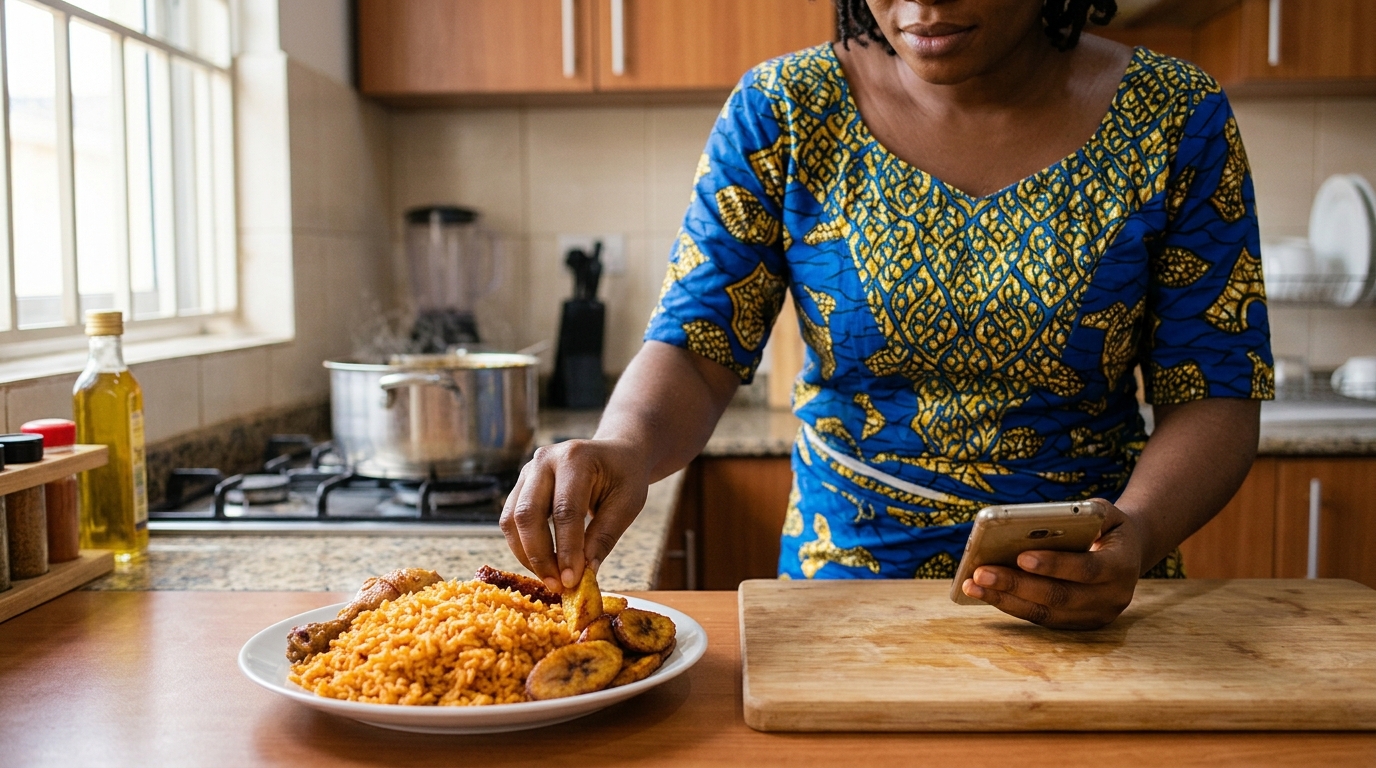
Imagine a family gathering on a beautiful Saturday afternoon. The jollof rice is steaming. Fried plantain is making its usual irresistible appearance. A bowl of delicious vegetable soup sits beside a plate of freshly prepared swallow, while ripe mangoes and oranges await their turn for dessert.
Everyone is ready to eat when Uncle Tayo, who was recently diagnosed with diabetes, reaches for the rice. “Ah-ah! Uncle Tayo, what are you doing?” Auntie Bisi exclaims.
“What do you mean? I’m taking rice!”
“Rice? With your condition? Are you trying to increase your blood sugar?” Before Uncle Tayo could respond, another relative joins the conversation.
“Please, leave the plantain alone too! And don’t even look at those mangoes!”
A third voice comes from the other end of the table. “Doctor said you have diabetes, not that you should eat everything you see!”
Uncle Tayo drops his serving spoon and looks around in disbelief. “So, what exactly am I supposed to eat – air and bottled water?”
For a moment, there was silence. Then somebody whispers, “Well, vegetables are safe, aren’t they?”
Just like that, the family has established its own diabetes nutrition committee, complete with a chairman, several advisers and absolutely no guarantee that their recommendations are correct!
Funny, isn’t it?
Absolutely! But beneath the laughter lies a serious question: How Much of the Food Advice Given to People Living with Diabetes Is Actually Correct? Must rice disappear permanently from their plates? Are ripe fruits forbidden? Is every carbohydrate a threat? And can someone living with diabetes still enjoy traditional Nigerian meals without compromising their health? The answers may surprise you.
The Real Culprit: Understanding What Happens to Food Inside the Body
Before we sentence rice, yam, bread and mangoes to a lifetime of dietary imprisonment, let us understand what diabetes actually does.

Diabetes mellitus is a chronic condition in which blood glucose, commonly called blood sugar, becomes too high because the body does not produce enough insulin or cannot use insulin effectively.
Insulin is a hormone produced by the pancreas. Think of it as a key that helps glucose move from the bloodstream into many of the body’s cells, where it can be used for energy.
When insulin is absent, insufficient or not working effectively, the body struggles to regulate blood glucose properly.
Now, where does food enter the picture? When we eat carbohydrates, our digestive system breaks much of them down into glucose. This glucose enters the bloodstream, causing blood glucose levels to rise. Insulin and other bodily processes then help regulate what happens next.
Here is the twist: carbohydrates are not found only in foods that taste sweet. Rice, yam, cassava, bread, potatoes, maize and many other starchy foods contain carbohydrates. Beans contain carbohydrates too, alongside protein and fibre. Fruits and milk also provide carbohydrates.
So, a meal does not need to taste sweet to raise blood glucose. However, this does not mean that every carbohydrate-containing food must be eliminated. The quantity eaten, the type of food, its preparation, what accompanies it and the individual’s treatment plan – all matter.
This is why diabetes nutrition is not a simple story of good foods versus bad foods; it is about understanding how different foods fit into an overall eating pattern.
The Great Food Debate: What Should Be On The Plate? Rice, Yam, Garri Or Fufu?
Let us return to Uncle Tayo’s dining table.
If rice could speak, it would probably be asking for legal representation by now! Rice is frequently accused of being unsuitable for people with diabetes. Yam, garri, eba, amala, semovita and pounded yam are often added to the same list.
But must these familiar staples be permanently banned? Not necessarily. These foods supply carbohydrates, which can raise blood glucose. The amount consumed is therefore important. A very large serving of rice, for example, can supply considerably more carbohydrate than a smaller serving.
The same principle applies to yam and cassava-based staples.
Consider two plates. One is dominated by a large mound of rice, with barely any vegetables or protein. The other contains a moderate portion of rice, accompanied by grilled fish and a generous serving of non-starchy vegetables.
Both meals contain carbohydrates, but their overall composition and quantities differ.
Choosing less-refined grains, where practical, may increase fiber intake. Brown rice, for example, generally contains more fiber than white rice. Nevertheless, brown rice still contains carbohydrates, and its portion remains important.
The same applies to traditional staples. No single food is automatically the best choice for every person with diabetes.
A useful question is not simply, “Can I eat rice?” It is, “What portion is appropriate for me, and how can I balance it with the rest of my meal?” That is a much more productive conversation.
Beans: A Friend in A Fiber-Rich Disguise

Now, let us invite beans into the discussion. Brown beans, black-eyed beans, kidney beans and lentils provide fiber, plant protein, vitamins and minerals. Their fiber content can support digestive health and help moderate the rate at which glucose enters the bloodstream.
But here comes another surprise: beans contain carbohydrates too! Does that make them unsuitable for people with diabetes? Certainly not. Their combination of fiber, protein and other nutrients makes them valuable components of a balanced eating pattern.
Moi moi, bean porridge and other bean-based dishes can fit into diabetes-friendly meals. Preparation matters, however. A dish prepared with excessive oil or accompanied by several other large carbohydrate portions may have a different overall nutritional profile.
What about beans and ripe plantain? They can be enjoyed together, but both contribute carbohydrates. The quantity of each food should be considered, and vegetables or other suitable accompaniments can help create a more balanced meal.
The lesson is simple: nutritious does not mean unlimited, and carbohydrate-containing does not mean forbidden.
So, do you think Uncle Tayo should be given the chance to take some mangos and even oranges? Can we take a vote on that right now? Would any of you who said ‘Yes,’ stand up to tell us why? Anyone representing the ‘No’ group?
You know what? Let’s carry our debate forward to the next conversation on this. By God’s grace, meet me here – same time, same topic, next month.
See you then!
Bye!


 English