

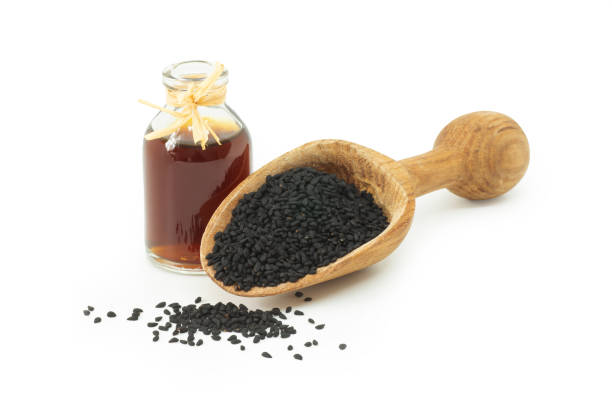
By Deborah Bamisaye
Black seed remains one of the tiniest nutritional seeds ever. Tiny and powerful! Does that mean that other seeds are not as valuable? Far from it: every seed created by God serves its purpose adequately and we have explored that for the past 10 episodes. However, it is important that in exploring the usefulness of a seed, we must be as thorough as possible. That has dragged us to the Part 2 of Black seed, where we will sure learn more on its power and purpose. I am ready to explore – and you? Let’s go!
Meanwhile, if you missed the first part of our exploration, read it here.
What WHO Says
The World Health Organization’s (WHO) current healthy-diet guidance emphasizes adequacy, balance, moderation and diversity. It specifically recommends a wide variety of nutrient-dense foods, including fruits, vegetables, whole grains, legumes, nuts and seeds.
Black seed can be part of a healthy diet; it should not be presented as the diet itself. WHO also says that: ‘Diverse diets are more likely to provide the range of vitamins and minerals people need.’ Did you just listen to that? I asked this because most people just rotate their foods in triangles, squares and pentagons. That is my personal way of describing some foods and their rotations. What I mean by this consumption pattern is: ‘for some people, today, it could be Rice and if it is not Rice, it will be Beans or Swallow (Triangular rotation),’ ‘Rice, Beans, Swallow and Yam/Bread (Squares),’ ‘Rice, Beans, Swallow, Yam/Bread, Noodles/Spaghetti (Pentagons).’ No seeds, nothing! One is tempted to ask: ‘Why?’ Any Ngozi there? Yes! Why?
You see, WHO’s guidance on nuts, pulses and seeds recognizes that varieties of foods combined, can provide protein, vitamins, minerals, essential fatty acids and energy, while also contributing to dietary diversity.

Black seed is promising.
Black seed is interesting.
Black seed is being studied but promising is not the same as proven. That’s much more responsible than either declaring it a miracle or dismissing it altogether.
What the Scientific Evidence Says About Black Seed
A 2023 overview examined 20 systematic reviews/meta-analyses concerning Nigella sativa. It found potentially beneficial effects across several health outcomes, but here’s the important part: 15 of the reviews were rated critically low quality, four low quality and only one moderate quality.
Of 110 assessed outcome indicators, 88 had very low certainty of evidence. The researchers therefore concluded that the clinical effectiveness of black seed still needs confirmation through larger, high-quality randomized trials. Maybe those hyping it can relax a little bit until these researches are completed.
What about Safety?
It is generally reported that Nigella sativa (Black seed) has a favourable safety profile, but the authors also said that more detailed research is needed before definitive conclusions about safety can be made.
Interestingly, a newer systematic review of clinical trials in children also concluded that more high-quality research is needed to establish appropriate forms and doses, despite not finding a statistically significant increase in adverse effects overall.
Eating a seed as part of food is not necessarily the same thing as taking concentrated black-seed oil or an extract. The research studies use different preparations, quantities and durations, which makes it difficult to translate every scientific finding into a simple instruction for ordinary readers. That’s another reason not to write, “Take X amount of black seed every day and you will get Y benefit.”
One finding that makes the article even more intellectually honest is a 2024 meta-analysis examining black seed supplementation and endothelial function where no significant improvement in the measured outcomes was found and the researchers noted substantial heterogeneity and called for larger, more diverse trials.
That’s useful because it demonstrates something our readers don’t hear often enough: Science doesn’t always say “yes.” Sometimes it says: “Interesting, but we need better evidence.” And that is still a valuable scientific answer.
What Does Science Think?
Well, black seed has genuine scientific interest. Its compounds have been investigated extensively; some studies report promising findings but the overall clinical evidence is not strong enough to justify the sweeping claims sometimes made about it. There are still quite a number of seeds out there yet to be mentioned in this series. We will be considering ‘Mustard Seeds,’ the next time. And after that, we may stop asking, “What can this seed do?” and start asking, “What can these seeds do together?” Because even the ones yet to be considered would surface in the science and common sense behind the seeds combos that will be discussed in order to get complementary nutrients over time.
With that said, let’s meet at this exact same junction, same street and same place. Don’t forget to bring popcorn and any healthy drink you have, as we run along these nutritional seeds journey next time.

 English