

By Morgan Nwanguma
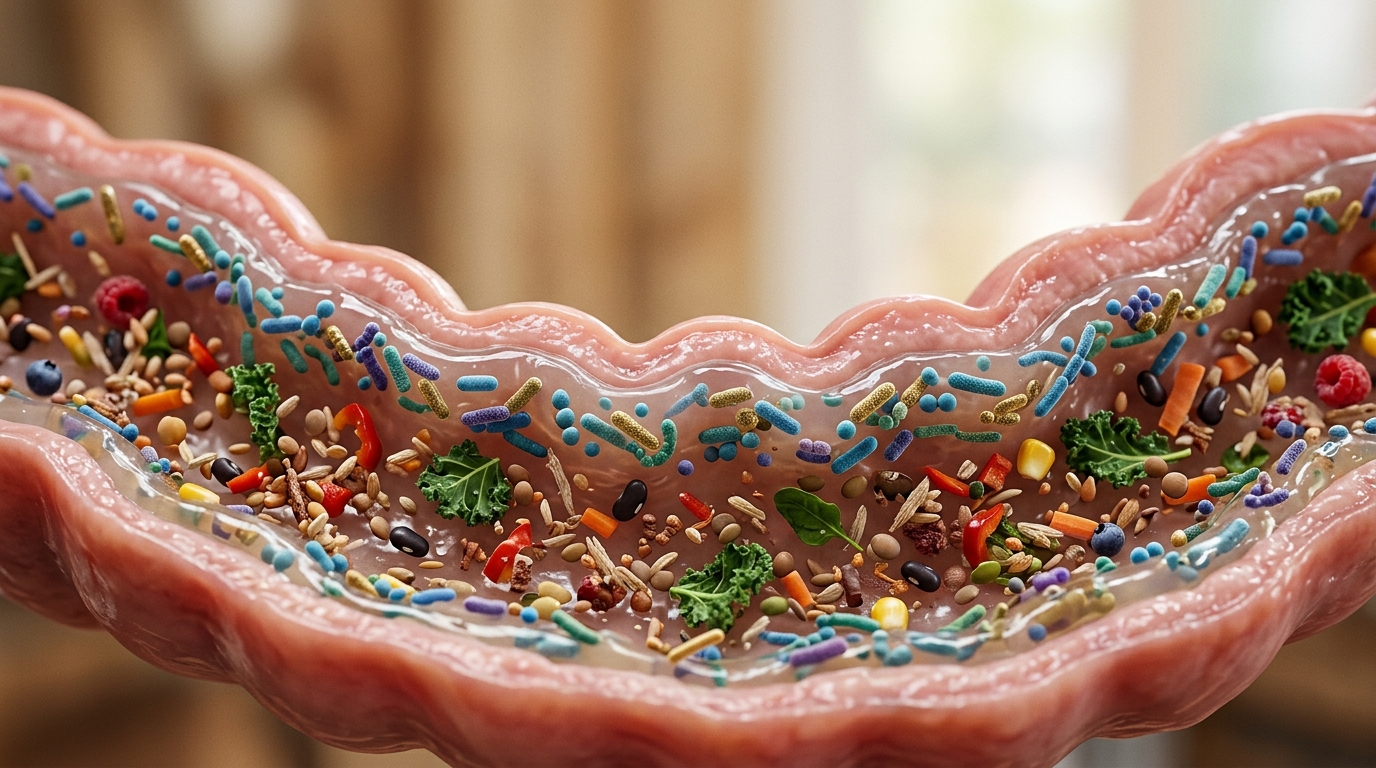
When dietary fibre is scarce, gut microbes may turn to an unexpected food source: the protective mucus lining of the intestine.
Gut bacteria need nutrients to survive. When fibre is in short supply, some microbes can begin breaking down proteins in the mucus layer that protects the gut. New research suggests that fibre can help prevent this process, while indigestible plant proteins may encourage microbes to produce more beneficial compounds.
Plant-based diets are associated with benefits for the gut, immune system, metabolism and cardiovascular health. Some of these effects may come from supporting a diverse community of bacteria in the intestines. Gut microbes break down dietary fibre and other components of plant foods, producing compounds that can influence human health.
Plants also contain phytochemicals, natural compounds that help protect plants from environmental stress and may have effects in the human body. However, scientists are still working to understand exactly how gut microbes process the many substances found in plant foods and how those interactions affect health.
Two studies led by Jenna AbuSalim and Joshua Rabinowitz of the Ludwig Princeton Branch provide new clues. One, published in the Proceedings of the National Academy of Sciences, examined how fibre and certain plant proteins influence microbial metabolism. The other, published in Nature Metabolism in June, investigated where several important metabolites come from.

“There’s growing interest across medical disciplines in manipulating the human microbiome or using its metabolic products themselves for therapy,” said Rabinowitz. “Diet holds great promise for controlling the microbiome and its outputs. But to devise effective therapeutic interventions, we need to understand what aspects of the diet control which microbial outputs.”
How Plant Foods Change Gut Metabolites
In the PNAS study, the researchers examined how plant-based foods affect phenol metabolites. Gut bacteria can produce these compounds while breaking down the amino acids tyrosine and phenylalanine, but the resulting metabolites can have very different effects.
Phenylpropionate and hippuric acid are produced from phenylalanine and have been associated with gut health and healthy body weight. In contrast, p-cresol sulfate and phenol sulfate are produced from tyrosine and have been linked to poorer outcomes in cancer patients and to systemic toxicity in people with kidney disease.
The researchers found that both dietary fibre and certain indigestible plant proteins—described as “proteins imitating fibre,” or Prif—shifted this balance. They reduced the production of phenol metabolites associated with harmful effects while increasing metabolites derived from phenylalanine.
Fibre has long been recognized as an important component of a healthy diet, but indigestible plant proteins have received considerably less attention. The researchers found that gut microbes can process these proteins, changing both the composition of the microbiome and the way the host metabolizes nutrients.
When combined with fibre, these proteins also appeared to alter microbial metabolism in ways that encouraged production of more beneficial phenols.
What Happens When Gut Bacteria Run Out of Fibre?
To determine where the different compounds came from, the researchers used stable, non-radioactive isotope labels to track proteins through the digestive systems of mice.
They found that the potentially harmful phenols were produced when bacteria consumed proteins originating from the host, including proteins in the mucus lining of the gut. The beneficial phenols, by contrast, came almost entirely from indigestible proteins in the diet.
Fibre reduced the breakdown of the gut’s mucus layer by bacteria, which lowered production of the harmful phenols. Indigestible plant proteins increased the amount of dietary protein available to gut microbes, providing them with more material from which to produce beneficial compounds.
“We think Prifs represent an emerging class of dietary nutrients that shape the composition of the gut microbiome and could have a far-reaching influence on metabolic health,” said AbuSalim. Rabinowitz suggested that Prifs could eventually become a dietary category worth tracking alongside fibre.

Rethinking Where Gut Metabolites Come From
The second study, published in Nature Metabolism, examined the origins of phenol metabolites as well as indole metabolites, which are produced from the amino acid tryptophan.
Indole metabolites have attracted considerable scientific interest because they have been associated with conditions ranging from inflammatory bowel disease and neurodegenerative disorders to cancer. Some studies have also linked them to processes such as cancer metastasis and anti-tumour immune responses.
Scientists have generally assumed that many of these compounds are produced primarily—or even exclusively—by gut bacteria. The researchers set out to test that assumption.
Using isotope tracing in mice, rats and human cells, they found that mammalian metabolism can produce substantial amounts of several indole and phenol metabolites on its own. These included compounds such as indole-3-lactate and indole-3-acetate.
In mice, levels of these metabolites remained relatively high even after antibiotics disrupted the gut microbiome. Researchers observed a similar pattern in samples from people taking antibiotics, including cancer patients.
Other metabolites that are produced exclusively by microbes showed a different pattern. Compounds such as indole-3-propionate and p-cresol sulfate declined following antibiotic treatment.
What This Could Mean for Diet and Microbiome Therapies
Together, the two studies offer a more detailed picture of how dietary nutrients interact with the gut microbiome and where important metabolites originate.
The findings could eventually help researchers develop therapies designed to increase or decrease specific metabolites. They also suggest that dietary interventions may influence the microbiome in more targeted ways than previously understood.
Identifying which foods affect particular microbial products could help guide the development of more precise dietary, probiotic and metabolic therapies.
“Beyond that,” said Rabinowitz, “a clearer picture of how different foods interact with the microbiome to modulate the production of bacterial metabolites will help sharpen the guidance nutritionists and doctors can give to people for disease prevention and therapy.”
The studies were funded by the Ludwig Institute for Cancer Research, the National Institutes of Health, the National Institute of Diabetes and Digestive and Kidney Diseases, the Princeton Alliance for Collaborative Research and Innovation, and Princeton University.
Joshua Rabinowitz is Director of the Princeton Branch of the Ludwig Institute for Cancer Research and a professor in the Department of Chemistry and the Lewis-Sigler Institute for Integrative Genomics at Princeton University. He is also a member of the Rutgers Cancer Institute.



 English