

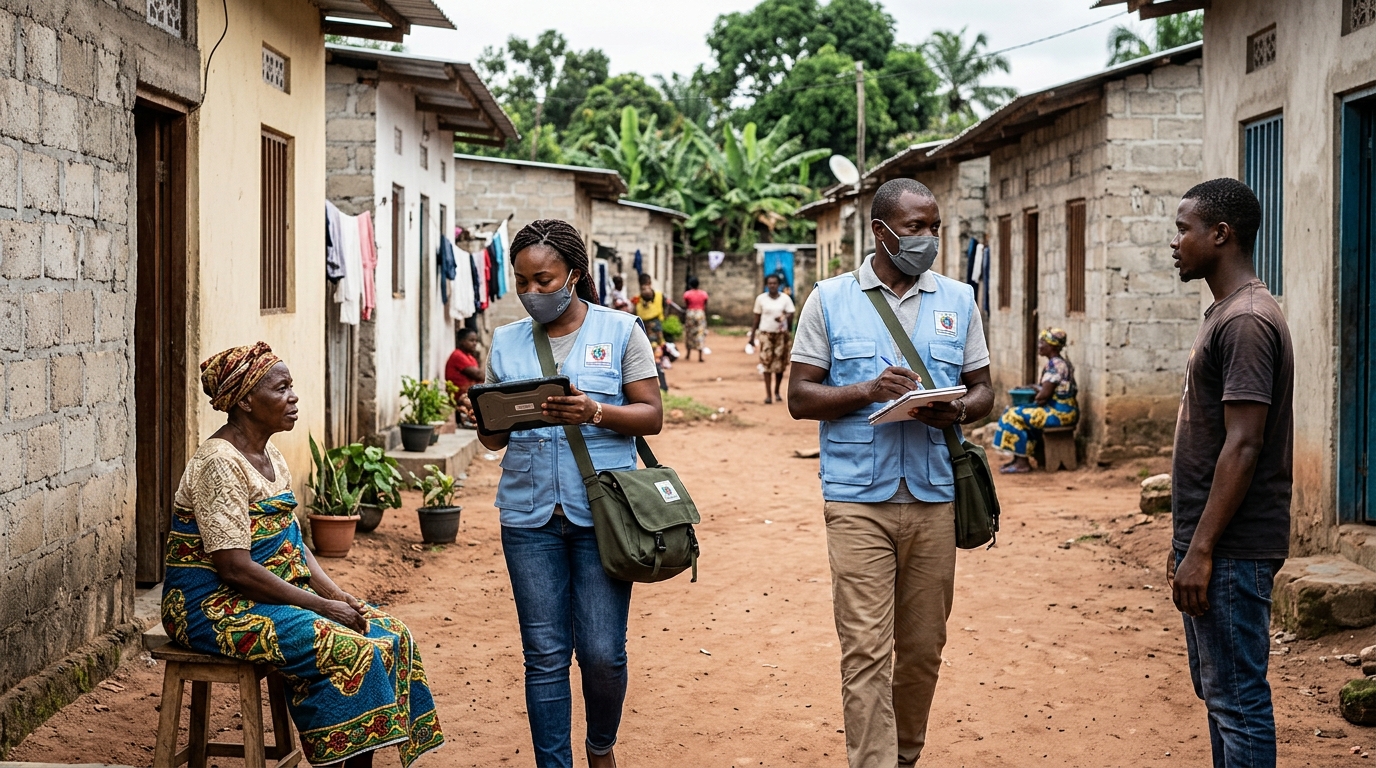
The fight against Ebola in the Democratic Republic of the Congo (DRC) is increasingly turning toward the communities at the centre of the outbreak. The World Health Organization (WHO) and Africa Centres for Disease Control and Prevention (Africa CDC) are calling for urgent, community-led action, stressing that health workers and treatment centres cannot contain the outbreak alone.
As of August 4, 2026, the DRC had reported 3,973 confirmed Ebola cases, 1,801 deaths and 776 recoveries across 51 health zones in five provinces, according to WHO. Contact follow-up stood at 75%, below the operational target of 95%.
Why community action matters
Containing Ebola depends heavily on how quickly suspected cases are identified, reported and connected to care. WHO says community, religious, women and youth leaders can help build trust, counter misinformation and encourage people to report alerts and seek care early.
This is particularly important in areas affected by insecurity, poor access to healthcare and population movement. In Ituri Province, the epicentre of the current outbreak, response teams have faced delayed detection, limited access to care and resistance to some response activities. The province accounts for nearly 90% of confirmed cases reported in the DRC. (WHO)
Uganda shows what is possible
The emphasis on community involvement comes as Uganda provides a recent example of successful outbreak control. Uganda declared its Ebola outbreak over on July 28, 2026, after recording 20 confirmed cases and two deaths. WHO and Africa CDC highlighted early detection, rapid contact tracing, coordinated response and trusted community engagement among the factors that supported containment.

For the DRC, the lesson is containing Ebola is not only about what happens inside treatment centres. It also depends on what happens in homes, neighbourhoods and communities.
WHO and Africa CDC are urging the DRC to improve contact follow-up, bring testing and treatment services closer to affected communities, strengthen laboratory capacity and support frontline health workers. They are also calling for continued surveillance and preparedness in neighbouring countries.
RELATED: First-Ever Test For Ebola Bundibugyo Now Approved By WHO


 English