

By Deborah Bamisaye
“Doctor, we’ve been married for four years… and nothing has happened yet.”
The doctor looked up gently and smiled reassuringly. “You’re not alone. Many couples face this challenge and many more don’t!”
The husband shifted uneasily in his chair. “We’ve tried prayers, advice from family, and even different medications but still no pregnancy.”
“Well,” the doctor replied calmly, “sometimes the problem is not that pregnancy cannot happen – it’s that the sperm and egg need a little help meeting each other.”
The wife leaned forward with curiosity. “Help? What kind of help?”
The doctor nodded. “It’s a simple medical procedure called Intrauterine Insemination, or IUI. Think of it as giving the sperm a shortcut to reach the egg.”
The couple exchanged hopeful glances. For the first time in a long while, the journey toward parenthood suddenly seemed possible.
What Is Intrauterine Insemination (IUI)?
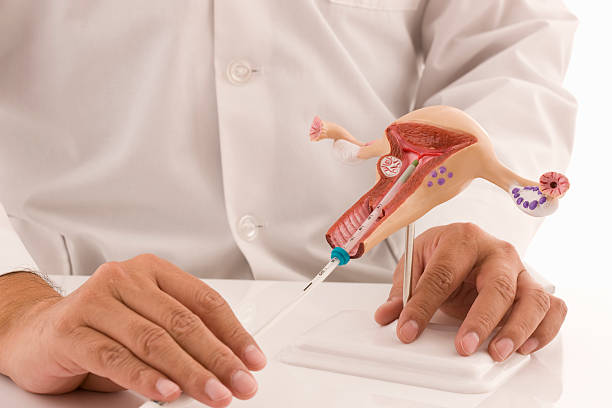
Intrauterine Insemination (IUI) is a fertility treatment where specially prepared sperm is placed directly into a woman’s uterus during ovulation to increase the chances of pregnancy.
Normally, sperm must travel from the vagina → through the cervix → into the uterus → and then to the fallopian tube where fertilization occurs.
With IUI, doctors place the sperm closer to the egg, reducing the distance the sperm has to travel and increasing the chances that fertilization will happen.

How the Procedure Works (Simple Steps)
1. Ovulation monitoring
The doctor monitors the woman’s menstrual cycle to know when she is ovulating.
2. Sperm collection
The male partner provides a semen sample (or donor sperm may be used).
3. Sperm preparation (washing)
The sperm is processed in the laboratory to select the strongest and healthiest sperm cells.
4. Insertion into the uterus
Using a thin catheter, the doctor places the sperm directly into the uterus.
5. Fertilization
If successful, the sperm travels to the fallopian tube and fertilizes the egg.
The whole procedure usually takes only a few minutes and is generally painless. ‘Painless’ for every expectant person is key and that is what this offers.
When Is IUI Recommended?
Doctors may suggest IUI in cases such as:
1. Mild male infertility (low sperm count or poor motility)
2. Unexplained infertility
3. Cervical mucus problems
4. Ovulation problems
5. Couples using donor sperm
Advantages of IUI
a. Less expensive than IVF
b. Simple and quick procedure
c. Usually does not require surgery
d. Minimal discomfort
e. Can be done in a clinic
Success Rate
The success rate varies depending on factors like:
i. Age of the woman
ii. Cause of infertility
iii. Sperm quality
iv. Whether fertility drugs are used
On average, 10–20% pregnancy rate per cycle is common.
Possible Risks (Though Rare)
a. Mild cramping
b. Small risk of infection
c. Multiple pregnancies (if fertility drugs are used)
Disadvantages of IUI:
1. Lower success rates compared to IVF
2. Risk of multiple pregnancy
3. Mild discomfort or cramping
4. Possible infection
Difference between IUI and IVF
Many people confuse IUI and IVF, but they are quite different fertility treatments.
Intrauterine Insemination (IUI)
In IUI, the doctor places prepared sperm directly into the uterus around the time of ovulation.
Fertilization still happens naturally inside the woman’s body, usually in the fallopian tube. It is usually recommended for mild infertility problems
In Vitro Fertilization (IVF)
In IVF, fertilization happens outside the body in a laboratory.

Doctors:
1. Collect eggs from the woman’s ovaries
2. Combine them with sperm in the lab
3. Allow fertilization to occur
4. Transfer the resulting embryo into the uterus. Often used for more serious fertility problems
Now, let me show you a simple Way to Remember the Difference we’ve been talking about.
IUI: Sperm is placed inside the uterus to meet the egg naturally.
IVF: Egg and sperm are joined in a laboratory before being placed in the uterus.
You could think of it like this: IUI gives the sperm a shortcut while IVF creates the meeting before the journey even begins.
Just like Dr. Abayomi Ajayi (Fertility Expert, Nordica Fertility Centre) said, “IUI is one of the simplest forms of assisted reproduction.” He explains that it involves preparing and concentrating sperm, then placing it directly into the uterus.
According to him: “IUI and IVF are cousins but not interchangeable… IUI is the most basic form.” He also cautions that: It does not work for everyone; it requires open fallopian tubes and good sperm quality. Dr. Oladapo Aimakhu (Associate Professor, UCH Ibadan) buttresses his point by saying that: IUI involves inserting sperm into the uterus without sexual intercourse. The goal is to: Shorten the distance sperm travels, increase chances of fertilization but he emphasizes: It helps with timing ovulation and fertility windows.
So, if you’ve been trying and wondering “what’s next,” remember: sometimes all it takes is a little help from science – like IUI giving the sperm a shortcut to the egg.
Stay informed, and take small steps every day toward your dream. Who knows? That tiny shortcut might just lead to tiny hands holding yours sooner than you think.
Go ahead… give your future ‘little bundle of joy’ a head start!
Until next time, stay hopeful!


 English